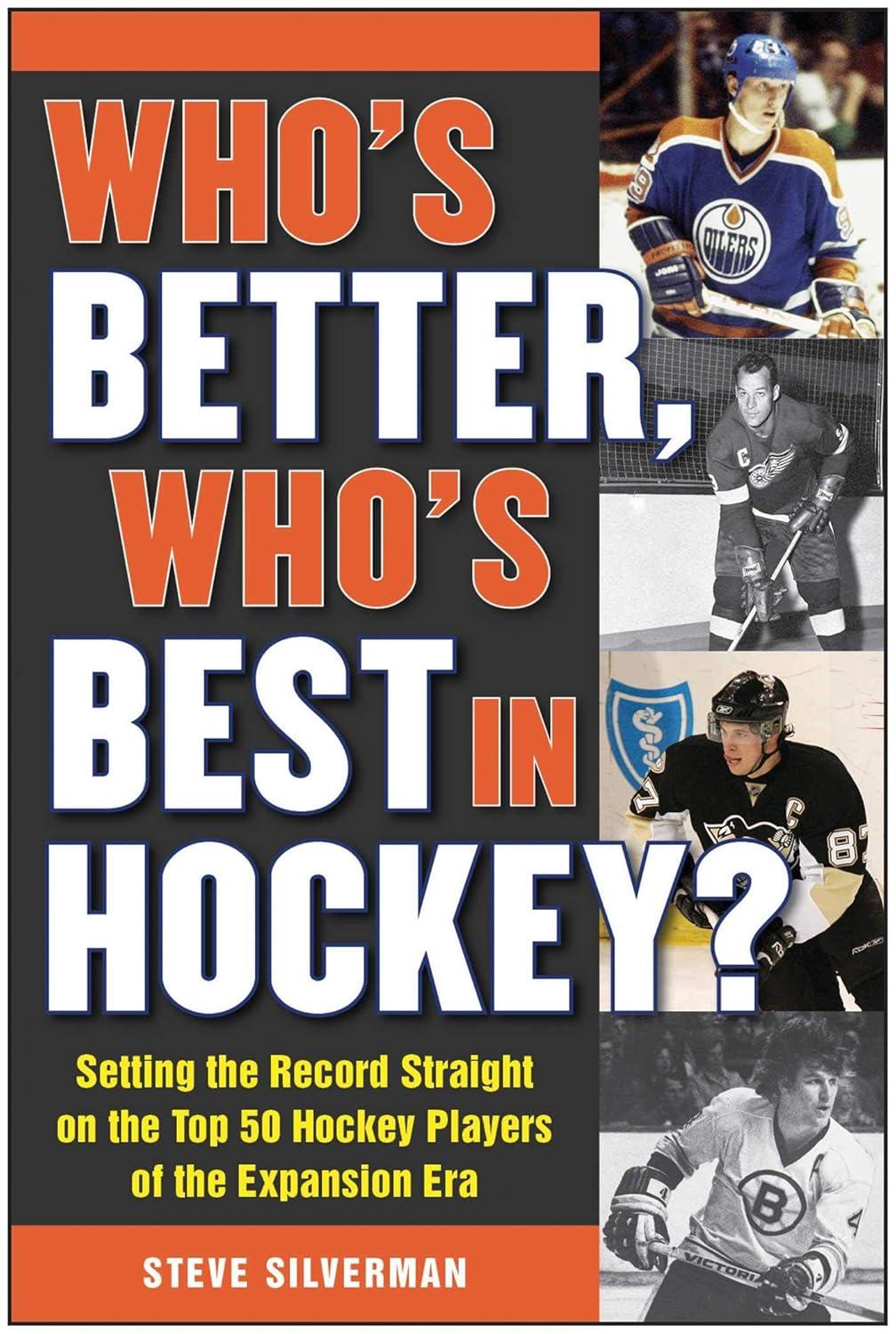
In the world of hockey, debates often become as heated as a playoff game in overtime. Who truly deserves the title of the greatest player of the Expansion Era? Is it the breathtaking finesse of Wayne Gretzky, the relentless power of Gordie howe, or the remarkable versatility of Sidney Crosby? Questions like these fuel conversations over pints at the pub and social media threads alike. Today, we’re diving into the captivating pages of “who’s Better, Who’s Best in Hockey?: Setting the Record Straight on the Top 50 Hockey Players of the Expansion Era,” penned by astute hockey columnist Steve Silverman.
This book is more than just a compilation of statistics; it’s a thorough examination that weighs the performances of hockey’s elite over the last fifty years, introducing a thoughtful blend of analytics and biographical insights. With 288 pages packed with detailed assessments and lively narratives, we felt compelled to explore how Silverman presents these celebrated players-each with unique strengths and contributions to the game we adore.
Whether you’re a lifelong fan of the sport or just dipping your toes into this captivating universe,this book promises not only to inform but to spark further debate. So, grab your favorite team jersey and join us as we unravel Silverman’s rankings of the best players who’ve graced the ice-linking past legends to present-day icons, and uncovering the criteria that shape our understanding of greatness in hockey. Let’s face it: every hockey lover will find joy and insight in this engaging read, and we can’t wait to share our thoughts!
Table of Contents
Overview of Our Hockey Journey with Who’s Better, Who’s Best in hockey

We’ve all had those debates: Who’s the best hockey player? Is it Bobby Orr? wayne Gretzky? Or maybe some of the newer guys like Sidney crosby? Our hockey journey has been defined by these conversations, and that’s what makes Who’s Better, who’s best in Hockey? such an exciting read. This book dives into the top 50 players of the Expansion Era and aims to settle those age-old debates with actual statistics and thoughtful analysis. It’s a gem for any hockey fan!
The author’s approach is refreshing. Steve Silverman doesn’t just list players and their stats; he evaluates them using analytics in a way that opens our eyes to the nuances of their careers.For fans who love the intricacies of the game, this book delivers big time. it also includes biographical essays, which help us connect with these legends beyond just their on-ice achievements.if you’ve ever wondered how modern players stack up against the greats from previous eras, you’ll appreciate how these comparisons are woven throughout the narrative.
In discussing our personal experience with this book, we enjoy how it encourages lively discussions. Each chapter brings forth new insights and facts that keep us engaged. Whether catching up with friends over a game or just wanting to dig deeper into hockey history, this book feels essential. We genuinely believe that fans from all walks of life can find something worthwhile in Silverman’s work. it’s informative,yes,but it’s also incredibly fun to read and debate with fellow fans.
As we turn the pages, we can’t help but reevaluate our own opinions on who’s been the greatest.The attention to detail, the player statistics, and the engaging writing style make it a must-have for hockey enthusiasts. Whether we’re discussing the defensive style of a player or the finesse of a forward, Who’s Better, Who’s Best in Hockey? provides a roadmap to navigate these conversations effectively.
With the book priced at just $10.99, we find it to be a fantastic addition to our hockey library. If you’re as passionate about hockey as we are, we can confidently say that this book is a worthy investment. Ready to enhance your hockey discussions? Buy Now on Amazon
Unpacking the Key Features of this Essential Hockey Reference
“Who’s Better,Who’s Best in Hockey?” provides a extensive look at the top 50 hockey players of the Expansion Era. This essential reference dives into crucial hockey analytics, enabling us to objectively compare players from different eras and positions.The book combines expert evaluations with biographical insights, making it not just informative but engaging. Silverman’s approach helps establish a clearer picture of who stands out in the chaotic world of hockey rankings. Whether we are lifelong fans or casual viewers, this book enriches our understanding of the game.
One of the standout features in Silverman’s work is its focus on analytics. We frequently enough hear debates over player greatness that rely heavily on statistics. By incorporating these numbers, the author adds a level of depth that casual discussions frequently enough miss. It’s refreshing to see comparisons that go beyond personal biases and nostalgias. Statistics provide a solid foundation that we can trust when debating the merits of players like Gordie Howe against modern legends like Sidney Crosby. This feature alone sets the book apart as an invaluable resource.
Additionally,the book includes well-crafted biographical essays that capture the essence of each athlete. These narratives bring to life the stories behind the statistics, allowing us to appreciate their journeys on the ice. Learning about their struggles and achievements connects us to their legacy in a more personal way. It’s like sitting down with a friend to discuss our favorite players over a game; the blend of storytelling with analytics makes it feel relatable and insightful.
The format also enhances our reading experience. With clear headings and structured sections, finding specific players or areas of interest is a breeze. We appreciate how the layout encourages us to engage with the material at our own pace.Each chapter provides bite-sized information, making it easy to digest and reference again later. This feature makes it a great coffee-table book or a go-to guide for trivia nights with friends!
Diving Deep into the Insights That Set This Book Apart
, we can’t help but appreciate how it brings clarity to a topic often filled with contentious debates. the focus on analytics to evaluate players adds a refreshing layer of depth. It’s not just about personal achievements or statistics; there’s a thoughtful methodology behind determining who truly stands out in the ever-evolving landscape of hockey.This viewpoint is precisely what distinguishes it from other hockey literature where opinions sometimes overshadow facts.
The author, Steve Silverman, does an extraordinary job of balancing both ancient and modern viewpoints. His approach allows us to glean insights not only into legendary players like Gordie Howe but also into the analysis of up-and-coming stars like Sidney Crosby. We find this blend engaging, making complex comparisons digestible. Readers can appreciate the evolution of the game through the perspectives of various players across different eras, which definitely enriches our understanding of hockey as a sport and community.
Moreover, the inclusion of biographical essays adds a personal touch to the analysis. It’s more than just a ranking; it’s about storytelling intertwined with statistics. This narrative style helps us connect on a human level with our favorite players, drawing us into their journeys. By combining hard data with personal anecdotes, the book provides a comprehensive look at the essence of hockey, making it an essential read for any fan seeking not just stats but real stories.
Lastly, the vital statistics presented alongside the rankings are incredibly useful for anyone interested in a deeper dive. Charts and comparisons allow us to visualize the information clearly. The balance of opinion, storytelling, and analytics offers a robust narrative that keeps us engaged from start to finish. It’s this unique blend that truly sets the visible insights of the book apart,allowing us to appreciate the artistry of hockey in a new light.
Our Favorite Highlights from the Top 50 Players of the Expansion Era
showcases some of the most significant and captivating moments from the book *Who’s Better,Who’s Best in Hockey?* Within these pages,we get to dive deep into the details,comparing legendary players and modern superstars alike. The author, Steve Silverman, brings a refreshing perspective by incorporating analytics that help us evaluate the best of the best on the ice. For any hockey enthusiast, this collection is more than just statistics; it’s a treasure trove of player stories and pivotal moments in hockey history.

One standout feature we love is the well-crafted biographical essays that accompany each of the top fifty players. Reading about how these athletes rose to fame gives context to their statistics. It humanizes them and highlights the challenges they faced. Silverman does an excellent job contrasting eras, showing how the style of play has evolved while still maintaining a faithful analysis of talent across different periods. Fans can appreciate what made each player unique, whether it was their skill, leadership, or sheer tenacity on the ice.
We also can’t overlook the inclusion of vital statistics that provide instant reference points for comparing players.Stats can often get overwhelming, but the way Silverman presents them is clear and concise, making it easier for us to see who dominated in scoring, assists, and defensive plays. Whether we’re looking for insights on Bobby Orr or wondering how Wayne Gretzky’s records stack up, this resource is invaluable. We find ourselves returning to these summaries often, making it a handy companion as we discuss our favorites with friends.
On top of that, each ranking sparks debates and discussions that are the heart of hockey fandom. We find ourselves arguing over whether Gordie Howe’s creativity outweighs Sidney Crosby’s consistency or how we can compare players from such diverse backgrounds. This not only speaks to the depth of the analysis but also reflects the spirited nature of hockey critique. The fun part is seeing how each player left their mark and how Silverman navigates these comparisons with skill.
this book stands out as a must-have for any true hockey fan. It not only provides insights into the players we admire but also enriches our understanding of the game overall. If you’re curious about hockey history or want to ignite your passion for the sport, picking up *Who’s Better, Who’s Best in Hockey?* is the way to go. Ready to dive in? Buy Now on Amazon
Final Thoughts and Recommendations for Hockey Enthusiasts
if we’re passionate about hockey, then discussing the sport’s legends is a must. With titles like “Who’s Better, Who’s Best in Hockey?”, we dive into the rich history of our favorite game and review the top players from the expansion era. This book opens up a world of debate, making us think critically about the athletes who have graced the ice. it’s like having a conversation over a beer with friends,passionately arguing who truly deserves to be in the spotlight.
The author,Steve Silverman,presents an engaging way to analyze players by integrating analytics alongside heartfelt commentary. It helps us appreciate not just the stats but the stories behind iconic players like Gordie Howe and Sidney Crosby. We can gush over thrilling highlights and get into the tough questions-how do we fairly compare players across different generations? This book is not just for die-hard fans; it’s a useful resource for anyone looking to enhance their understanding of hockey.
For anyone with a love for this sport, it’s worth bringing home. With a decent price point of $14.99, it offers a wealth of knowledge packed into 288 pages. The insights shared allow us to reference our favorite players and teams with authority, adding depth to our discussions. We consider this book a valuable addition to our hockey library, one that we’re proud to reccommend to fellow enthusiasts. So, if you’re ready to enrich your hockey knowledge, check out this must-read by Silverman and prepare for some lively debates!
Ready to purchase? Get it now on Amazon
Customer Reviews Analysis
Customer Reviews Analysis
In our exploration of the book Who’s Better, Who’s Best in Hockey?: Setting the Record Straight on the Top 50 Hockey Players of the Expansion Era, we couldn’t help but dive into the insights provided by fellow readers. Although the feedback we’ve encountered is limited, it offers a glimpse into the perceptions surrounding this hockey-centric title.
Overall Sentiment
From the reviews we’ve gathered, the consensus leans toward a positive reception. The phrase “Great purchase.” stands out as a testament to the satisfaction of at least one reader. This succinct affirmation suggests that the book delivers significant value, perhaps not only in its analysis but also in its presentation and insights.
quality and Value
While we have only one direct review to highlight, it prompts us to consider the themes of quality and value in hockey literature.Readers frequently enough seek out books that not only entertain but also educate and spark engaging discussions among fans. The simplicity of the review indicates that this book may successfully attract a broad audience, from die-hard hockey fans to casual readers interested in sports history.
| Aspect | Reader Feedback |
|---|---|
| Purchase Satisfaction | Great purchase. |
| Accessibility | Potentially appealing to a wide audience. |
| Content Quality | Insights worth exploring (implied). |
while we eagerly await a broader spectrum of feedback that might delve deeper into various aspects such as style, depth of analysis, or entertainment value, the initial response gives us hope that Who’s Better, Who’s Best in Hockey? is indeed a worthy addition to any hockey aficionado’s library. We encourage our readers to engage with the book and contribute their own thoughts, as the discourse around the legendary players of the expansion era is certainly one worth having.
Pros & Cons
Pros & Cons
As with any product, Who’s Better, Who’s Best in Hockey? by Steve Silverman comes with its own set of advantages and disadvantages. Hear’s what we found as we delved into this fascinating read.
| Pros | Cons |
|---|---|
| Provides a comprehensive ranking of the top 50 hockey players of the Expansion Era. | Some readers may find the analytics approach too complex or limiting. |
| Includes insightful biographical essays that add depth to each player’s story. | Debates surrounding player rankings may lead to disagreements among fans. |
| Offers a blend of historical context and modern performance analysis. | Limited visual aids; more images or infographics could enhance engagement. |
| Ideal for both hockey enthusiasts and those seeking a serious sports reference. | Some players may feel underrepresented based on personal bias or criteria. |
| Well-structured and easy to navigate through various players and eras. | Not all players are covered in-depth, leaving some fan favorites without detailed essays. |
while Who’s Better, Who’s Best in Hockey? has its flaws, it ultimately serves as an engaging and thought-provoking resource that any true hockey fan would appreciate. We hope this breakdown helps you decide whether to add it to your collection!
Q&A
Q&A Section for “”
Q1: What makes “Who’s Better, Who’s Best in Hockey?” different from other hockey rankings?
A1: This book stands out due to its reliance on analytical data combined with historical context. Steve Silverman takes a deep dive into not only statistics but also the nuances of the game across different eras. He addresses critical questions about how to compare players of varying positions and timeframes, making his rankings well-rounded and thought-provoking.
Q2: Who are some of the top players included in the book?
A2: The book features a fascinating lineup of hockey greats, such as Gordie Howe, Bobby Orr, and Wayne Gretzky, along with contemporary stars like Sidney Crosby. Each player’s contributions to the game are thoughtfully examined, providing insights into why they made the cut into the top fifty.
Q3: Does the book incorporate modern analytics, and how does this affect player comparisons?
A3: Yes, Silverman integrates modern analytics to evaluate players’ performances effectively, allowing for a more objective comparison. This approach helps us gain a clearer picture of how players have excelled in different roles,ultimately bridging some of the gaps between past and present.
Q4: Are there biographies included for the featured players?
A4: Absolutely! The book includes biographical essays that provide context and background for each player showcased in the rankings. This not only enhances our understanding of their achievements but also adds a personal touch, making it more than just a list of stats.
Q5: Is “Who’s Better, Who’s Best in Hockey?” suitable for casual fans or only for hardcore hockey enthusiasts?
A5: The book is designed to appeal to a wide range of readers. While it provides in-depth analysis that appeals to hockey nerds, it’s also writen in an accessible style that makes it enjoyable for casual fans. We think anyone with an interest in hockey will find something to appreciate within its pages.
Q6: How does the author address the challenges of comparing players from different eras?
A6: Silverman openly discusses the challenges in making such comparisons. He acknowledges the evolution of the game, training, and player conditioning, offering insights that help us better understand the context of each player’s career. This transparency adds depth to his rankings and reasons for the placements.
Q7: What was your overall impression of the book?
A7: We found “Who’s Better, Who’s Best in Hockey?” to be a compelling read that sparks conversation and debate among hockey fans. The combination of engaging narratives, solid research, and thorough analysis ensures that whether we agree or disagree with his rankings, silverman gives us plenty to think about in our love for the game.
Feel free to reach out if you have more questions or want insights into specific parts of the book!
Unleash your True Potential
As we wrap up our exploration of “Who’s Better, Who’s best in Hockey?”, we can confidently say that this book is an essential addition to the library of any hockey enthusiast. Steve Silverman masterfully tackles the intricate nuances of comparing players across generations and positions, offering a rich blend of analytics and compelling narratives that breathe life into the stats. Whether you’re a fan of the legends of the past or the modern superstars lighting up the ice today, this book provides a well-rounded perspective that sparks debate and deepens recognition for the game.
In an era where hockey statistics continue to evolve, having a resource like this at our fingertips is invaluable. With its thorough biographical sketches and careful rankings,”who’s Better,Who’s Best in Hockey?” not only informs but also invites us to reflect on our own views about who truly deserves a spot among the greats.
So, if you’re ready to dive deeper into the world of hockey and satisfy your curiosity about the top players of the Expansion Era, we highly encourage you to grab a copy of this engaging read. Head over to Amazon to secure your own copy today!