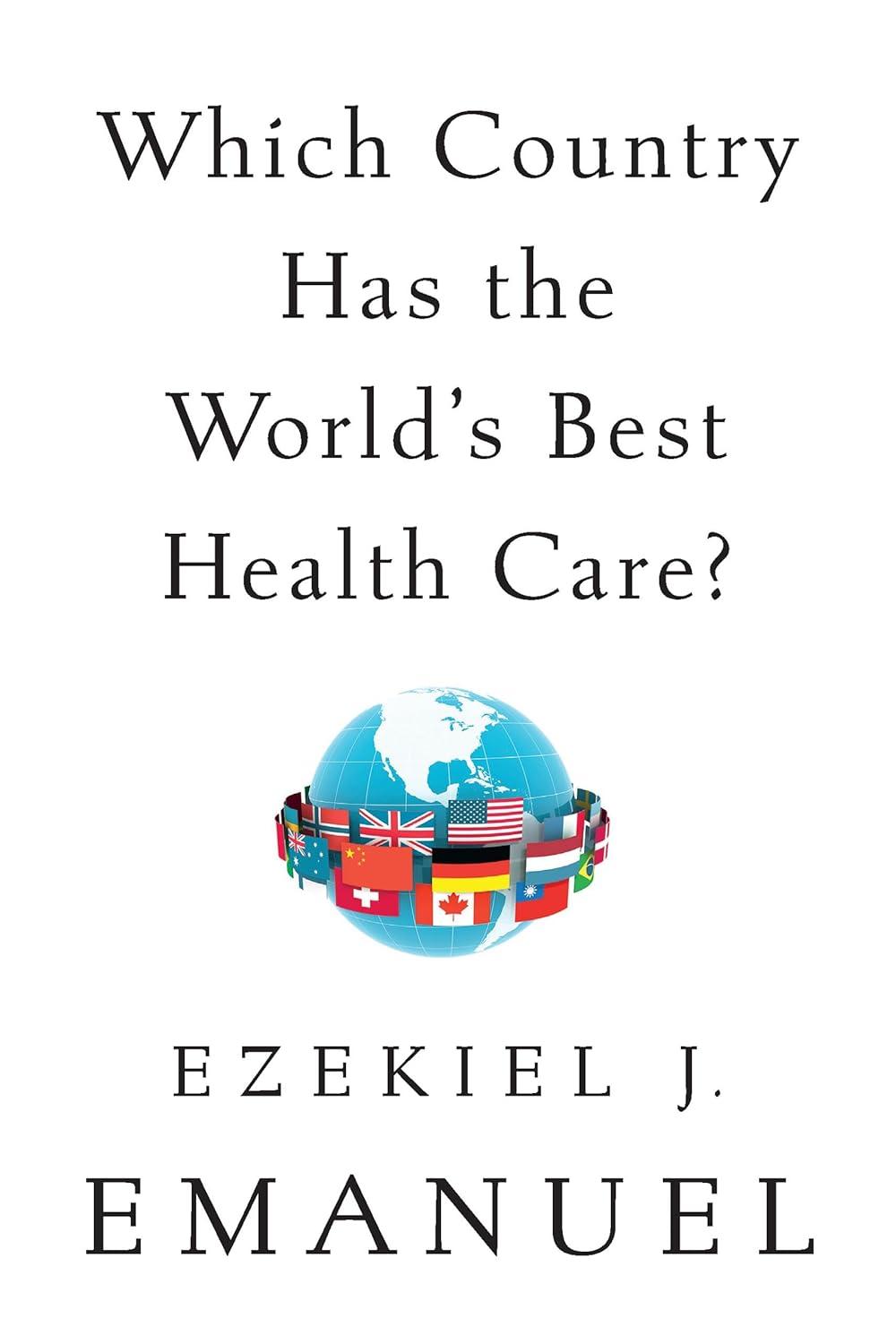
In our journey through the ever-evolving landscape of global health care, we frequently enough find ourselves grappling with a pivotal question: which country truly offers the world’s best health care system? in his thought-provoking book, “Which Country Has the World’s Best health Care?”, esteemed doctor adn health policy expert Ezekiel J. Emanuel embarks on an incisive exploration across eleven diverse health care systems, including the United States, Australia, and France, among others.
With meticulous detail and expertise, Emanuel dissects the strengths and weaknesses of each system, revealing critical insights that challenge our preconceived notions about health care standards worldwide. As we dive into this 512-page tome, we find ourselves not only comparing the efficiency and effectiveness of thes health care models but also reflecting upon the lessons that can be gleaned from their successes and failures.
No health system is without its flaws-whether it’s the surplus of hospital beds in Germany or the challenges of managing chronic illnesses in France, each country faces unique hurdles. Moreover, the book unearths common threads, such as the rising costs of chronic care and the need for better mental health resources, that resonate across borders. Join us as we take a closer look at Emanuel’s findings and explore how they can inform and potentially transform our own perspectives on health care back home. In this review, we will sift through the evidence, weigh the triumphs and pitfalls, and engage in meaningful conversations about what “best” really means in the context of health care.
table of Contents
An In-Depth Look at Global Health Care Systems

Understanding health care systems worldwide can be a real eye-opener. When we delve into the book, we find it offers a thorough look at which country has the world’s best health care. Dr. Ezekiel J. Emanuel takes us on a journey through the health care systems of eleven different countries, illustrating strengths and weaknesses. From the U.S. to nations in Europe and Asia, the analysis reveals that while the United States may have a reputation for advanced medical technology, it falls short in delivering care effectively compared to other nations.
As we explore various health care systems, the book breaks down the unique traits of each, establishing a clear framework for comparison. for example, we learn how the financing methods and service delivery differ significantly among these countries. Financing models, patient responsibilities, and overall efficiency are just a few of the topics addressed in detail. The diverse landscapes of health care demonstrate not only where countries excel but also the challenges they face,such as rising costs and access disparities. Dr. Emanuel’s thorough research and clear explanations make it easier to grasp these complex issues, which is invaluable, especially for those of us interested in health policy.
The book emphasizes critical lessons for reforming the U.S. health care system by identifying tangible solutions derived from the experiences of other nations. We appreciate the author’s candid assessment that no singular system stands out as the best; rather, several compelling practices emerge across countries. These can serve as blueprints for improving our own health care system. For example, ensuring worldwide coverage and simplifying administrative processes are among the actionable insights presented. Reading the book not only informs us about other countries’ systems but also inspires discussions about how we can evolve our approach to health care.
Though the book is dense and requires some perseverance to get through, the wealth of insights makes it a worthwhile endeavor. We see the intricate layers of healthcare policies, and the ancient context provided helps us understand why systems are shaped the way they are today. For anyone looking to navigate the complexities of global health care, this is an essential resource. Moreover, it encourages us to think critically about the future of health care globally and, importantly, within our borders.
To truly appreciate the nuances of global health care, we recommend checking out the book. It serves as a vital tool for individuals and policymakers alike, steering us towards actionable change that can ultimately benefit everyone in our society.
Exploring Key Features of leading Nations’ Health Care
We’ve all heard debates about which country has the best health care, and Ezekiel J. Emanuel’s insightful exploration provides a detailed roadmap of this complex landscape. The book dives into the healthcare systems of eleven countries,including the United States,Canada,and several European nations. Each country is analyzed based on specific criteria, revealing strengths and weaknesses that shape the quality of care provided. we appreciate how Emanuel doesn’t shy away from addressing the challenges all systems face, like rising costs and complexity in delivery.
One of the standout features of this book is its structured approach. each country is assessed using eight topics that cover everything from financing to the extent of population coverage. emanuel’s comprehensive analysis brings to light the historical context that shapes each nation’s model. As a notable example,while the U.S. spends significantly more on healthcare per capita than its counterparts-around $10,700-it often underperforms in indices like access and efficacy. We find this frustrating, especially knowing that other countries manage to deliver essential services better at lower costs.Moreover, the inclusion of “lessons learned” for the U.S. healthcare system is both practical and enlightening. We’re especially drawn to suggestions like ensuring universal coverage and decreasing the complexity that bogs down the healthcare experience. These insights feel relevant as we look towards potential reforms that could make our system more equitable. By synthesizing real-world examples and evidence-based points, Emanuel empowers us to engage in meaningful discussions about healthcare policy and its future.
In our pursuit of understanding, this book holds value not just for healthcare professionals but for citizens interested in how global systems work. The narrative captures the essence of what is at stake-our well-being and access to care-and as we delve deeper, we see that no system is flawless.Ultimately, what we take away is a spreadsheet of possibilities, highlighting that improvements are attainable without a complete overhaul of existing frameworks. Using this comparative lens helps us appreciate the nuances of healthcare across nations and reminds us that collaboration could lead to better outcomes for everyone.
Our Insights on Quality, Accessibility, and Affordability

When diving into the essentials of healthcare systems, quality, accessibility, and affordability stand out. In “Which Country Has the World’s Best Health Care?”, we find that the quality of care varies significantly across the globe. The author, Ezekiel J. Emanuel, thoroughly examines the systems of eleven different countries.What we appreciate most is how he breaks down each healthcare model and holds a mirror to their strengths and weaknesses. This helps us see how these elements compare and teaches us what might work in the U.S.
Accessibility is another critical factor in evaluating healthcare systems. Emanuel demonstrates through his comprehensive analysis that universal coverage isn’t just beneficial; it’s essential. Various countries, such as France and Norway, have made strides in ensuring that all citizens can access healthcare services. We can’t help but feel it raises the question: Why can’t the U.S. achieve similar goals? The examples show us that making healthcare accessible can drastically improve health outcomes, which is a lesson we find important for any ongoing discussions about reform.
Affordability is a pressing concern for many of us who navigate the complexities of healthcare in the United states. By showing how other countries tackle costs, the book reveals that while price does not always signify quality, there’s a critical relationship between them. Emanuel talks about financing healthcare and the necessity for regulations on drug prices. This resonates with a lot of our readers, as it highlights challenges that we must overcome to bring healthcare costs down. A fairer system is a recurring theme, and there are certainly insights worth implementing.
the book doesn’t just present data; it ignites a necessary conversation about what a better healthcare system could look like for us. As we reflect on quality, accessibility, and affordability, we’re encouraged to think about how the findings from other countries can lead us to solutions that improve our own healthcare system. it’s a conversation worth having, and we’re hopeful that understanding these international perspectives can guide us towards real change.
Comparing Patient Experiences Across Borders

In “Which Country Has the World’s Best Health Care?” we dive into interesting contrasts in health care experiences across various countries. The author, Ezekiel J. Emanuel, opens our eyes to how diverse health care systems operate, revealing the strengths and weaknesses of each. By comparing eleven countries, he allows us to appreciate the nuances of patient experiences around the globe. The details reflect not only the efficiencies and challenges of each system but also offer insights into how they could potentially inform improvements in our own health systems.
We find ourselves leaning into the author’s thorough assessments while exploring the history of health care systems in countries like Canada, Germany, and the U.S. Each chapter highlights unique aspects, such as how systems are financed and the typical out-of-pocket costs for patients. For instance, it’s illuminating to see how the U.S. ranks on various dimensions compared to countries like France and Switzerland, which frequently enough boast better health outcomes at lower expenditures. This kind of direct comparison can be not only eye-opening but also motivating for those advocating for change in our health care policies.
What’s particularly intriguing is the fact that no single country emerges as the clear “winner.” Instead, we witness a blend of accomplished practices and evident pitfalls. Emanuel’s analysis brings forth critically important discussions about prescription drug pricing,care for chronic illnesses,and access to mental health services. For us, it doesn’t just critique the current state but encourages a collaborative approach to learning. We ponder how these international case studies can inspire actionable reforms at home.
Amidst differences, universal challenges unite these health care systems. Rising costs, inefficiencies, and care coordination are themes that resonate across borders. Understanding these shared issues fosters an gratitude for the potential solutions drawn from different countries. By examining what works-and what doesn’t-this book enlightens us on the path to a more equitable health care system,prompting essential conversations that can ultimately lead to improved patient experiences everywhere.
Our Recommendations for Optimal Health Care Choices

We often find ourselves pondering the question: which country really has the best health care? This inquiry takes us on a fascinating journey through the health systems of eleven nations, artfully presented by Ezekiel J. Emanuel, M.D., in his book. It’s no secret that the U.S. doesn’t top the list, despite our important investment in health care. A key takeaway from the book is that while no system is without its flaws, certain countries offer insights into how to deliver better health care overall. In this review,we’ll explore the compelling arguments presented by Dr. Emanuel,helping us sift through the complexities of global health care.
What stands out is that each country studied is compared across eight different topics-like financing, population coverage, and out-of-pocket expenses. This structured approach allows us to easily gauge where different systems might excel.for instance, nations like Norway and Switzerland often get nods for their efficient financing models, while Canada shines with its universal coverage.The insights we gather from these comparisons arm us with knowledge we can utilize to advocate for improvements in our own health care system. The book provides a solid framework while illustrating varying degrees of accessibility and quality across different regions.
Dr. Emanuel doesn’t stop at merely citing statistics; he pulls back the curtain on the challenges these systems face. be it the rising costs of pharmaceuticals or the growing demand for mental health services, the book dives deep into the pressing issues affecting global health care today. One of the standout lessons for us is the call for universal coverage and the effectiveness of auto-enrollment strategies. It’s incredibly relevant as we consider how to improve health care in the U.S.and forge a system that prioritizes accessibility for all.
this book is more than just an academic piece; it’s a practical guide for anyone interested in health policy. Whether you’re a healthcare professional or an informed citizen eager to understand the intricacies of health systems worldwide, this read is invaluable.We recommend diving into the pages of this insightful work to gain a comprehensive picture of how health care can evolve for the better. Ready to explore the insights it offers? Here’s the opportunity to [check the latest price](https://www.amazon.com/dp/1541797752).?tag=sosdjs-20
Customer Reviews Analysis

Customer Reviews Analysis
As we dive into the insights provided by readers of Which Country Has the World’s Best Health Care?, it becomes clear that Ezekiel J.Emanuel’s work has sparked a lively discussion surrounding global healthcare systems. Below, we highlight common themes, insights, and critiques drawn from the reviews:
Overall Impression of the Book
Readers seem to collectively appreciate the comprehensive nature of Emanuel’s research. Many describe the book as:
- Informative and thorough,particularly in its assessment of various countries’ healthcare systems.
- Accessible to readers from both medical and non-medical backgrounds, making it a valuable resource for anyone interested in healthcare policies.
- Structured and methodical, although some find it excessively formulaic at times.
Highlights from Reader Feedback
| Key Themes | Reader Sentiment |
|---|---|
| comprehensive research | Positive – “Informs how various nations finance and deliver medical care.” |
| Methodical Approach | Mixed – “A bit formulaic,but more digestible than dense reports.” |
| Need for Real-Life Examples | Negative – “Tediously written,lacking engaging patient stories.” |
| Practical Lessons for the U.S. | Positive – “Six lessons outlined are crucial for improving American healthcare.” |
| Accessibility of Content | Positive/Negative – “good for the informed, but may be a slog for casual readers.” |
Common critiques
While many reviews commend the author’s expertise and the thorough examination of healthcare systems, some critiques surfaced regarding:
- The structure and delivery of content, with several readers finding certain chapters dull or overly factual.
- A desire for more engaging narratives or patient-centric accounts to illustrate the systems’ impacts.
- Some noted that while Emanuel attempts to provide a balanced view, detailed insights into specific country errors could be improved.
Who Should read This Book?
Our readers unanimously suggest this book is a must-read for:
- Healthcare professionals seeking to understand global benchmarks.
- Students and scholars of health policy looking for a basis in systemic comparisons.
- Any citizen wanting to engage in informed discussions about the complexities of healthcare reforms.
Conclusion
our analysis reveals that Which Country Has the World’s Best Health Care? is a significant contribution to healthcare discourse. Despite certain structural criticisms, the book opens critically important dialogues and provides avenues for improvement across various healthcare systems. As we reflect, it’s evident that understanding these findings is vital for shaping the future of healthcare policy.
Pros & Cons
pros & Cons of “Which Country Has the World’s Best Health Care?”
As we explore Ezekiel J. Emanuel’s insightful examination of health care systems worldwide, it’s essential to weigh the pros and cons of this comprehensive book. Here’s what we found:
| Pros | Cons |
|---|---|
| In-depth analysis of various health care systems. | May not provide definitive answers for every reader. |
| Engaging narrative from an expert in the field. | Some readers might find the data-heavy approach overwhelming. |
| Valuable insights into practical lessons for improvement. | Focuses on systemic issues, which may seem pessimistic. |
| Addresses common global health care challenges. | Limited by the eleven countries studied; other systems are not explored. |
| Well-supported arguments backed by evidence and research. | Some readers may disagree with the rankings or conclusions drawn. |
this book serves as a valuable resource for understanding the complexities of global health care systems.We believe it opens the door to important conversations about how we can learn from one another to improve health outcomes. Though, it’s worth considering the various perspectives and nuances that come with evaluating these diverse systems.
Q&A
Q&A Section: Best health Care System - Which Country Has the World’s Best?
Q1: What prompted the exploration of global health care systems in this book?
A1: We found that a common sentiment among many is that the United States does not offer the best health care for all its residents. This book ignites an important conversation that prompts us to look globally. Author Ezekiel J. Emanuel takes us on a journey through eleven different countries to compare their health care systems, revealing insights that could help improve our own.
Q2: How does Ezekiel J. Emanuel rank these health care systems?
A2: Emanuel uses a thorough analytical framework to evaluate each country’s system based on several factors such as accessibility, quality of care, cost efficiency, and overall health outcomes. His expertise allows us to better understand what makes a health care system excel or falter.
Q3: What can we learn from the countries studied in the book?
A3: Each country has its strengths and weaknesses. Such as, we learn about Norway’s focus on universal coverage and preventative care, while France has challenges with chronic illness management. By examining these diverse approaches, we can adopt best practices and formulate actionable strategies to enhance our own system.
Q4: Did the book provide any surprising insights?
A4: Absolutely! We were surprised to learn that even countries often viewed as health care superstars have significant issues to address.For instance, while germany has an abundance of hospital resources, it grapples with overcapacity. This highlights that perfection is elusive in health care, irrespective of the system in place.
Q5: Is there a definitive answer to which country has the best health care?
A5: emanuel suggests that there isn’t a one-size-fits-all answer. Each system has unique attributes that cater to their populations’ needs. The “best” health care system may differ based on various criteria and personal preferences, making this discussion both rich and complex.
Q6: What are the book’s practical implications for the United States?
A6: By analyzing the successes and failures of other countries, we identify lessons that can guide reforms in the U.S. health care system. The book sparks a conversation around key areas like mental health services, chronic disease management, and controlling costs that are highly relevant to us.
Q7: Who would benefit from reading this book?
A7: This book is ideal for anyone interested in health policy, students studying public health, or individuals who are simply curious about how health care systems around the world operate. It provides a concise yet comprehensive overview for all of us who desire to understand this critical topic better.
Q8: Where can we get a copy?
A8: You can find “Which country Has the World’s best Health Care?” at most major book retailers, both online and in-store. With its engaging insights and thorough analysis, we believe it’s a worthy addition to anyone’s reading list, especially for those invested in the future of health care.
Experience the Difference
As we wrap up our exploration of “Which country Has the World’s Best Health Care?”, it’s clear that no health care system is without its challenges or triumphs. Ezekiel J. Emanuel takes us on a thought-provoking journey through the intricacies of health care across eleven different nations, shedding light on the strengths and weaknesses that each country faces. Through a comparative analysis, we gain insight into what works well-and what doesn’t-in health policy around the globe.
While the United States falls short of being the best, Emanuel’s meticulous breakdown offers us valuable lessons from countries like Australia, France, and Taiwan, inviting us to reconsider our own system. This deep dive not only informs us about global health care but also fuels the ongoing discussion about how we can improve the lives of all citizens.
We encourage you to embark on this enlightening journey yourself. Immerse in the detailed assessments, unique challenges, and shared aspirations of various health care systems by reading the book. It’s an opportunity for us all to reflect on what health care can and should be.
Ready to discover the potential paths to better health for everyone? Let’s explore the insights together. Get your copy here and join the conversation on health care systems that might just influence our future!