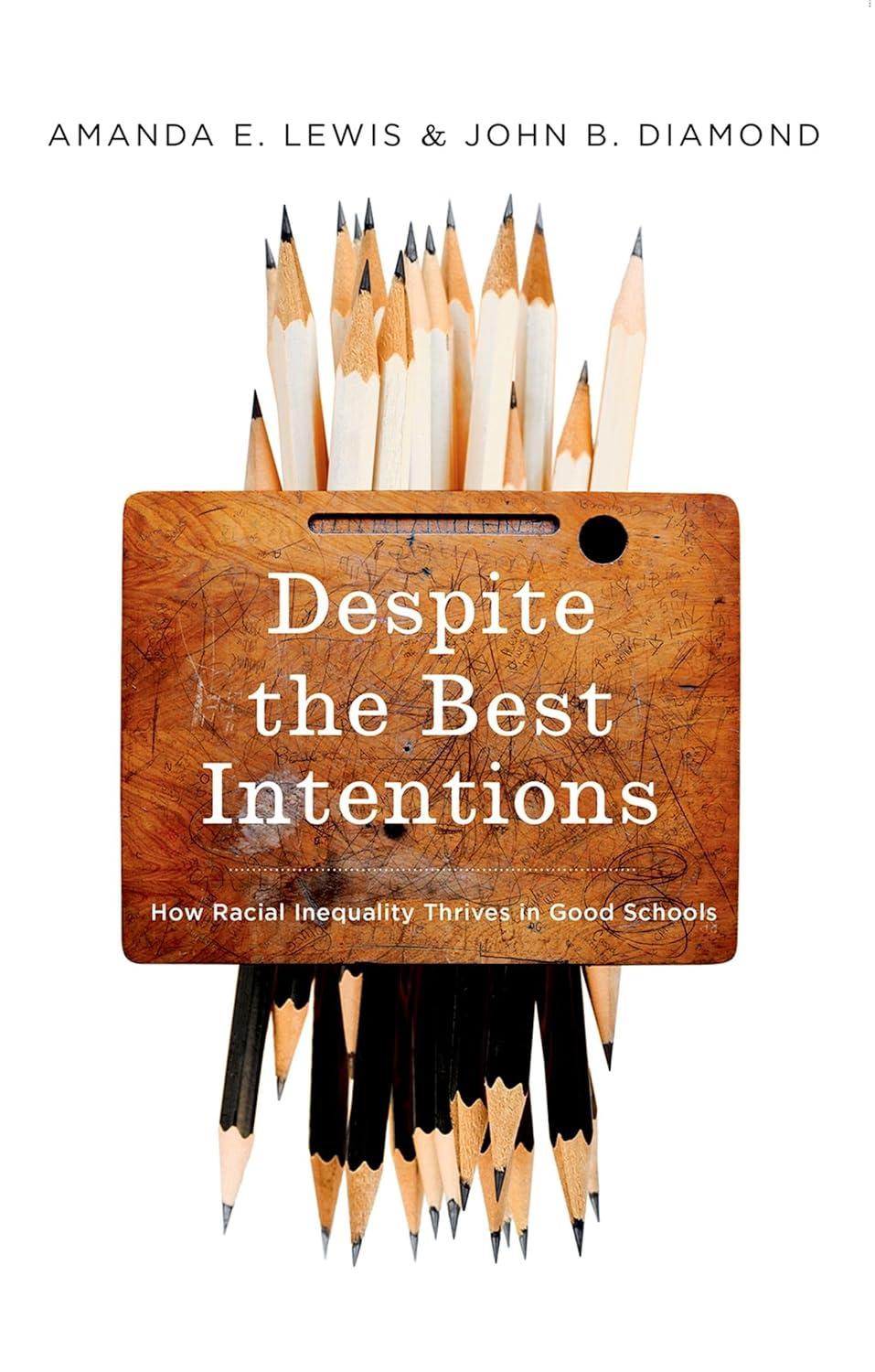
In today’s increasingly polarized landscape, conversations around education often focus on the disparities that exist along racial lines, especially within ostensibly accomplished institutions. As we delve into “Despite the Best Intentions: How Racial Inequality Thrives in Good Schools,” we find ourselves navigating a complex and eye-opening journey alongside authors John Diamond and Amanda Lewis. This book isn’t just an academic treatise; it is indeed a compelling exploration of Riverview High School, a model of what many would consider a post-racial, well-functioning educational environment. Yet, as we turn each page, it becomes clear that even the best of intentions are not enough to dismantle deeply entrenched systems of inequality.With a rich tapestry of interviews and data collected over five years, Diamond and Lewis pull back the curtain on the troubling reality that black and Latino students continue to face important academic challenges despite being surrounded by resources and support. As we engage with thier findings, we reflect on our own experiences and biases, questioning the very narratives we’ve been conditioned to accept about race, achievement, and schooling in America.
Join us as we dig deeper into this thought-provoking work, examining how race shapes academic outcomes in ways that extend far beyond socioeconomic factors. In this review, we will share our insights and reactions, exploring the implications of the study’s findings on our understanding of education and equity. Let’s embark on this critical examination together, challenging our perspectives and striving for a more equitable educational landscape.
Table of Contents
overview of Our Journey Through Racial Inequality in Education

Our journey through racial inequality in education has been a complex and eye-opening experience. The book offers a deep dive into the underlying issues that persist in even the most seemingly diverse and affluent schools. It tackles how good intentions often fall short, leaving behind marginalized groups of students, particularly Black and Latino pupils. These are kids who, despite being in a well-resourced environment, continue to struggle academically while their white and Asian peers excel. This is where the insights from this research come into play, highlighting the frustrating but critical question of why disparities still exist.
as we reflect on our educational experiences, we realize that this book forces us to confront uncomfortable truths. It’s not just about individual effort or family background; it’s about the systemic factors within schools that perpetuate these divides. The five years of interviews and data gathered at Riverview High are thorough, painting a vivid picture of the stark differences in academic attainment among students based on race. The careful, nuanced exploration of these disparities brings to light what really goes on in a school, challenging us to think critically about the actions we take in our own communities.
Through our collective engagement with this text, we recognized the crucial need for change. Inspired by the findings, we’ve actively sought to implement new strategies within our educational initiatives.Our test program,”the Academy,” in Fort Myers,Florida,aims to address these very challenges by providing tailored support and engagement for students who have been historically underrepresented. By utilizing the principles outlined in the book, we’ve witnessed remarkable growth among participating students, proving that thoughtful intervention can indeed shift the trajectory of their educational paths.
Understanding the persistence of racial inequality in schools doesn’t just provoke thought; it ignites passion for action. We’re now more committed than ever to raise awareness and provide resources that align with the findings of this research. The journey contextualized within this book has helped us see that, while the task is daunting, eradicating the educational divide is within our reach if we take appropriate measures. Sharing these experiences has solidified our dedication to advocating for equity in education.
Unearthing Key Features and Insights from the Text
Key Features Analysis
One of the standout aspects of this book is its comprehensive approach to understanding the intricacies of racial inequality within educational institutions. The authors, john Diamond and Amanda Lewis, utilize five years of rich data and interviews from Riverview High School to reveal the unexpected truth behind the academic performance gap. What we appreciate is how they challenge conventional viewpoints about why this gap persists, diving deep into the everyday realities of students as they navigate their educational journey.
Another key feature is the focus on the micro-level dynamics that contribute to systemic outcomes in education. The authors don’t just scratch the surface; they engage with the school’s culture,teaching practices,and student interactions to illustrate how implicit biases and institutional racism shape experiences. This nuanced examination allows us to see the educational system not just as an abstract concept,but as a lived experience that vastly differs across racial lines.
We also find the clarity of writing engaging. The style is accessible, making complex sociological theories understandable for a broader audience. This attribute is crucial as it encourages a wide range of readers,including educators,policy makers,and community members,to reflect on their roles in perpetuating or challenging these inequalities. We believe this open invitation to dialog is one of the book’s most valuable features.
Additionally,the book offers practical insights. It doesn’t stop at identifying the problem; it delves into actionable strategies that communities can adopt to bridge the achievement gap. This focus on solutions is refreshing and empowers us to think critically about how we can implement change in our educational environments. The first-hand narratives shared in the book also lend a personal touch that deepens our understanding of the human impact behind the statistics.
we find that the book’s blend of rigor and relatability makes it an essential read for anyone committed to dissecting and addressing racial disparities in education. the engaging style and well-founded research enable us to confront uncomfortable truths while keeping our eyes on the path forward.
Deep Dive into themes That Resonate with Our Experiences
Racial inequality in education is a complex issue that deeply resonates with our own experiences. We often hear about the gaps in achievement between different groups, particularly black and Latino students compared to their white peers. It’s a narrative we’re all too familiar with.The insights from the work challenge our understanding of why these disparities exist in educational settings that seemingly have all the right resources-like Riverview High School. This setting creates a engaging backdrop for exploring the persistence of these gaps even in good schools, making the story all the more compelling.
As we dive deeper into the themes presented, it becomes evident how society’s well-intentioned efforts can often miss the mark. The voices of educators, administrators, and policymakers become louder, echoing the struggles of students who find themselves on the wrong side of inequality. We’re reminded that good intentions don’t always translate into effective equity practices. This dissonance opens up space for critical reflection on our roles in education, inviting us to look inward and assess how we contribute to or challenge existing systems that uphold inequalities.
This book’s powerful narrative encourages us to reflect on the systems in place that allow privilege to thrive, often unintentionally. We begin to see how the very frameworks and attitudes that educators possess can hinder progress rather of fostering it.It’s a crucial reminder that creating real change requires not just awareness but a collective commitment to action. We’ve seen this firsthand in programs we’ve ventured into, where modifying our approaches has led to tangible improvements for students who’ve been previously marginalized. It’s a testament to the fact that understanding the underlying issues is the first step toward crafting solutions.
ultimately,the themes around racial inequality and educational experiences are not just theoretical but deeply personal for many of us. The case studies and anecdotes presented help ground these discussions in reality, showing that each student’s story matters. By grasping how systemic forces at play can shape individual outcomes, we can be better equipped to advocate for meaningful change. This book serves as both an enlightening resource and a powerful call to action for educators, parents, and community members committed to fostering genuine equity within our schools.
Recommendations for Engaging with the Content Effectively
Engaging with “Despite the Best intentions” offers us a transformative lens through which we can examine our own educational experiences and the systems at play. To truly appreciate the insights this book provides, we shoudl approach it with an open mind, ready to rethink our assumptions.One effective method is to take notes as we read. Jotting down thoughts and questions not only helps us internalize the facts but also allows us to connect specific findings to our own classroom or community contexts.
Additionally, discussing the book with peers can enhance our comprehension. Whether it’s a casual book club or a more organized study group, sharing perspectives deepens our understanding and sheds light on different interpretations. Engaging in dialogues allows us to confront our biases and see how the themes of racial inequality ripple into our lives and those around us. This collective exploration frequently enough leads to more robust and constructive conversations about how we can strive for change.
Moreover, we recommend implementing the ideas presented in the book in practical settings. As a notable example, if we work in education, we could initiate discussions on how to foster an inclusive environment that addresses the disparities highlighted by Diamond and Lewis. By creating action plans or community engagement projects based on the research, we can harness this knowledge to advocate for more equitable educational practices. The book’s findings serve as a springboard for deeper inquiry and action.
Lastly, it’s crucial that we approach the book with a critical eye. Understanding the authors’ frameworks and their implications can help us navigate our emotions around these topics. Evaluating our responses helps us grow and move forward with more awareness and commitment to change. Let’s embrace the challenge that this book presents and use it as motivation to advocate for a more equitable education system.
Reflections on Our Understanding of racial Dynamics in Schools
When we dive into “Despite the Best Intentions,” it becomes clear that understanding racial dynamics in schools is vital. This book challenges us to look beyond the surface of what we think we certainly know about educational equality. the authors explore how even in seemingly perfect educational settings like Riverview High School, racial disparities persist. These insights make us reflect on the complex realities affecting black and Latino students, even when the playing field seems level.
As we read through this engaging study, we’re struck by the many layers contributing to the achievement gap. Rather than attributing disparities solely to socio-economic factors, the authors introduce us to a nuanced outlook. They emphasize that issues like implicit biases, school policies, and peer interactions can heavily influence student experiences. This is important for anyone involved in the education sector, as it compels us to rethink our approaches to fostering true inclusivity.
The research and interviews presented also encourage us to think critically about our own educational experiences. We can’t help but consider how our perceptions may have been shaped by the environments we navigated. For us, this book has not only driven our awareness but sparked a desire for action within our communities. By implementing lessons learned, we’ve witnessed impactful changes, particularly in our pilot program aimed at addressing these disparities. It’s rewarding to see how understanding racial dynamics can led to actionable solutions.
Ultimately, we see “despite the Best Intentions” as a pivotal resource.It educates and empowers us to challenge systemic issues in education and strive for innovative methods that can bridge the gap. We feel that everyone should engage with this work, as it provides crucial insights into the racial dynamics at play in schools.
This book serves as an essential guide for educators, policymakers, and community leaders alike. By fostering a deeper understanding of racial dynamics, we can collectively work towards a more equitable educational landscape for all students. We’re excited to continue this journey of learning and advocacy, inspired by the robust findings presented in this eye-opening study.
Customer Reviews Analysis
Customer Reviews Analysis
In examining the customer reviews for Despite the Best Intentions: How Racial Inequality Thrives in Good Schools,we found a rich tapestry of insights that reveal the book’s impact on its readers. the sentiments expressed in these reviews highlight the book’s thought-provoking nature, as well as its call to action for those passionate about addressing educational inequalities. Below, we delve into some key themes that emerged from the feedback.
Engaging and Reflective
One of the most frequent comments we noticed was the book’s accessibility and engaging writing style. Several readers expressed thankfulness for how the authors managed to transform what could have been a dense academic text into an enjoyable read. A reviewer from a Social and Cultural Contexts of education course noted, “unlike a lot of class readings, this book is enjoyable to read and gives information that will make you stop and reflect on your own K-12 educational experience.” This sentiment is significant as it suggests that the authors successfully balanced rigor and readability, allowing readers to connect personal experiences with broader systemic issues.
Inspiration for Action
Another prominent theme is the book’s ability to inspire action among readers. One review detailed how a group of community members took the insights gleaned from the book to create a program called “The Academy” aimed at helping students achieve academic success. With clear examples of implementation and quantifiable success, this narrative underscores that the book does more than inform; it empowers readers to effect change in their own communities. As the reviewer put it, “we are absolutely certain that the educational divide can be eradicated this decade.”
Thought-Provoking content
Readers uniformly pointed out that the book poses challenging questions and critiques of the current educational system. Some reviews described it as “thought-provoking” and “not an easy read but worthwhile,” indicating it spurs deep reflection about personal beliefs and systemic structures. This analysis of educational hegemony invites readers to confront uncomfortable truths about privilege, bias, and inequity within the school system.
Mixed Perspectives on Research and Bias
While many readers praised the rigorous research within the book, there were criticisms regarding perceived bias in the authors’ analysis. Some reviews grappled with whether the focus on one affluent school adequately represented broader educational challenges faced across different contexts. This tension reflects a strong desire among readers for nuanced discussions that address various dimensions of race and class in education. Notably, one scholar suggested alternative readings for those seeking comprehensive approaches to education reform, indicating a recognition that this book may not be the singular solution to the complex issues at hand.
Summary of Key Themes
| Theme | Description |
|---|---|
| Engaging and Reflective | A readable text that prompts self-reflection on K-12 experiences |
| inspiration for Action | Motivates community initiatives aimed at closing the educational gap |
| Thought-Provoking Content | Encourages challenging discussions about privilege and inequality |
| Mixed Perspectives on Research | Debate over bias and depiction in the authors’ analysis |
the reviews reflect a diverse range of responses, highlighting the importance of this book within discussions of race and education. Whether through its engaging narrative or its provocative content, Despite the Best Intentions resonates deeply with readers who are eager to understand and address the complexities of racial inequality within the educational landscape. For anyone invested in making a difference, this book stands as a crucial resource.
Pros & Cons
Pros & Cons of “Despite the Best Intentions: How Racial Inequality Thrives in Good Schools”
| Pros | Cons |
|---|---|
| Provides a deep dive into systemic issues affecting racial minorities in well-resourced schools. | Might potentially be somewhat dense for casual readers due to its academic approach. |
| Challenges common narratives surrounding the achievement gap, encouraging critical thinking. | Focuses largely on one suburban school, which may limit generalizability. |
| Backed by five years of thorough research and interviews, enhancing credibility. | The complexity of the topic may feel overwhelming for some readers. |
| Engages with both educators and parents, making it relevant for a wide audience. | Some readers may find the conclusions troubling or unsettling. |
| Offers actionable insights for addressing racial disparities in education. | Not enough focus on solutions may leave some readers wanting more. |
Final Thoughts
As we consider the profound insights “Despite the Best Intentions” brings to the conversation about racial inequality in education, we find that it is a necessary read for educators, policymakers, and anyone passionate about social justice. While it does pose challenges in its density and troubling conclusions,the value it offers in understanding the systemic nature of academic disparities makes it a crucial part of the educational discourse.
Q&A
Q&A Section: “”
Q1: What is the central theme of “Despite the Best Intentions”?
A1: at the heart of this book lies the exploration of racial inequality within an ostensibly well-functioning school, Riverview High School. We delve into why, despite ample resources and diverse representation, black and Latino students consistently underperform compared to their white and Asian peers. The authors, John Diamond and Amanda Lewis, argue that systemic issues within the school environment contribute considerably to this persistent achievement gap.
Q2: How does the book differ from other studies on academic achievement?
A2: Unlike many studies that attribute educational disparities to external factors such as poverty or family stability,Diamond and Lewis focus specifically on the internal dynamics of a suburban school. They challenge conventional narratives and encourage us to rethink how we understand race’s role within the educational system. This shift in perspective is what makes their findings both provocative and essential for deeper discussions on equality in education.
Q3: Who would benefit from reading this book?
A3: We believe this book is invaluable for educators, policymakers, and anyone interested in social justice. It provides insights that can inform practices and policies aimed at bridging the racial achievement gap. Additionally, students and scholars in education, sociology, and race studies will find its data-rich analysis particularly enlightening.
Q4: What impact do the authors hope to achieve with their research?
A4: diamond and Lewis aim to revolutionize our understanding of the achievement gap by revealing how, even in ideal conditions, racial disparities can thrive. Their goal is to spark a broader conversation about the mechanisms of inequality in schools and encourage a reexamination of the systemic barriers that persist, ultimately fostering an environment where all students can succeed equitably.
Q5: Is the writing style accessible to general readers?
A5: Yes, while the content is academically thorough, the authors present their findings in a way that is approachable for general readers as well. They balance rigorous research with compelling narratives from their interviews, ensuring that we can engage with the material without needing a deep background in sociology or education.
Q6: how has the book been received by readers and critics?
A6: “Despite the Best Intentions” has garnered positive feedback, holding an notable average rating of 4.7 stars from readers. Many appreciate its insightful analysis and the fresh perspective it provides on an important social issue. The book’s popularity in various categories indicates its relevance and the growing conversation around racial dynamics in education.
Q7: What can we expect to take away from this book?
A7: By the end of our journey through “Despite the Best Intentions,” we can expect to gain a deeper understanding of the complexities surrounding racial inequality in educational contexts. we will be encouraged to critically evaluate the systems we often take for granted and armed with knowledge that can inform how we advocate for change in our own communities.
Embody Excellence
As we close this exploration of “Despite the Best Intentions: How Racial Inequality Thrives in Good Schools,” we find ourselves grappling with the poignant realities that John Diamond and Amanda Lewis so skillfully illuminate. Their study at Riverview High School challenges the complacent narrative that affluence and diversity can insulate us from the persistent racial achievement gap. It compels us to reflect on the structural and systemic issues that persist within schools-even those that appear to be models of equity.
This book serves not only as an academic examination but as a stirring call to action for educators, policymakers, and communities alike. It encourages us to question our own assumptions and to seek practical solutions that prioritize genuine equality in educational outcomes.
We invite you to delve into this insightful work and join the conversation about how we can collectively confront these enduring disparities. If you’re ready to deepen your understanding and engage with this critically important dialogue, consider picking up a copy of the book here. together, let’s seek to uplift every student, ensuring that despite our best intentions, we make true progress in the fight for racial equity in our schools.