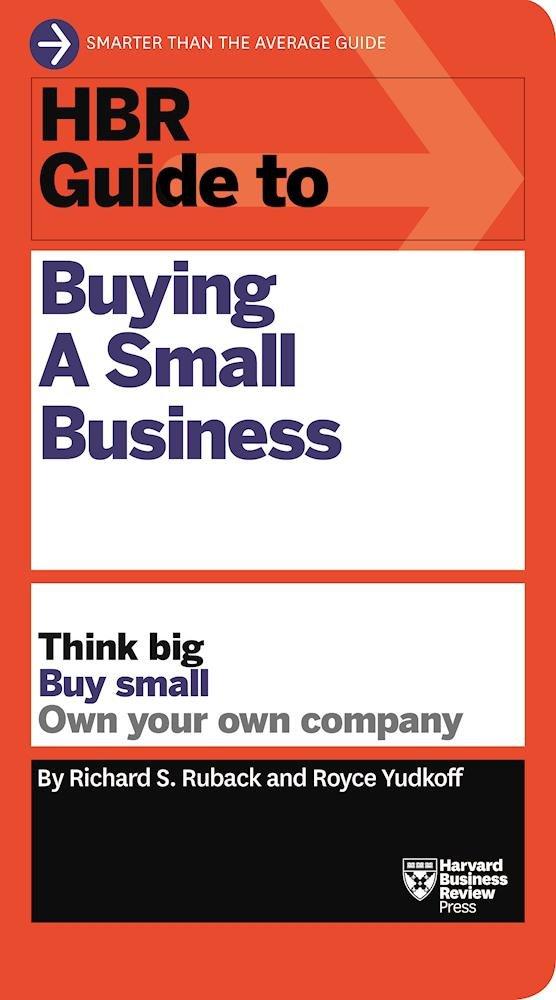
welcome to our latest blog post, where we dive into a transformative resource for aspiring entrepreneurs: the “HBR Guide to Buying a Small Business: Think Big, Buy Small, Own Your Own Company.” If you’ve ever felt the allure of being your own boss but found the prospect of starting a business from scratch daunting,you’re not alone. We’ve navigated these waters,weighing our options between corporate career paths and the risky world of startups,only to discover a compelling option-buying a small business.
In this guide, Harvard Business School professors Richard Ruback and Royce Yudkoff skillfully illuminate this frequently enough-overlooked pathway, presenting a blueprint for success that resonates with both seasoned professionals and those of us just beginning our entrepreneurial journeys. With practical advice at our fingertips, we’ll learn how to evaluate potential businesses, negotiate deals, and ultimately, transform our dreams of ownership into reality.
Join us as we explore the invaluable insights packed within the pages of this thorough guide. With its blend of expert knowledge and relatable concepts,we’re excited to share our firsthand experiences and thoughts on how this book can empower anyone ready to take the leap into business ownership. Together, let’s discover if the path to buying a small business could be the perfect fit for us!
Table of Contents
Exploring the Journey to Small Business Ownership

Buying a small business can feel like a daunting journey, but the HBR Guide to Buying a Small Business simplifies this complex process. It lays out an empowering path for those considering this venture, helping us navigate the world of entrepreneurship through acquisition. With insights directly from Harvard Business School professors Richard Ruback and Royce Yudkoff,this guide dives deep into how we can match our ambitions to the realities of owning a business. Prepare to embark on a journey that could lead to significant financial rewards and personal fulfillment as we explore what it takes to become our own boss.
The guide is structured in a clear, logical format that makes it easy to follow.It covers all the essential topics we need to grasp before we dive into the small business marketplace. From figuring out if this path works for us, to raising the necessary capital, the book gives practical steps we can take. We especially appreciate how it emphasizes the importance of finding the right business to buy and avoiding common pitfalls that could derail us along the way. With practical templates included in the appendix, we are armed with the tools we need to navigate the complexities of negotiations and deal closings.
For newcomers, this book serves as an excellent introduction to the world of small business acquisitions. It strikes a balance between thorough explanations and accessibility, even for those of us who may lack prior experience.It’s reassuring to know that we’re getting well-rounded advice from trusted experts. The conversational style makes the content relatable while ensuring we grasp the full life cycle of a business acquisition. As we read through the chapters,we find the information presented in concise,digestible sections that enable us to clearly understand each step of the journey.
However, it’s vital for us to remember that while this guide lays a strong foundation, it shouldn’t be our sole resource. Some readers have noted that certain aspects might be a little challenging to implement depending on location, and we should be prepared to adapt the recommendations accordingly.Nonetheless, the guide delivers an invaluable experience for budding entrepreneurs, helping us set realistic expectations while equipping us with essential knowledge.
Unpacking the Key Features of the HBR Guide
When we dive into the HBR Guide to buying a Small Business, we discover a treasure trove of features that are both practical and insightful.This guide is particularly appealing because it presents a clear roadmap for anyone interested in stepping into the world of entrepreneurship through acquisition. One of the basic aspects we appreciate is how it helps potential buyers assess if they’re genuinely ready to embark on this journey. By raising critical questions, it encourages us to reflect on our motivations and capabilities, ensuring we’re fully prepared for such an endeavor.
The authors, Richard Ruback and royce Yudkoff, provide a holistic view that includes raising capital and evaluating business prospects. This is crucial because many of us may find the financial aspects daunting. Their straightforward advice demystifies the process, making us feel more confident in navigating these waters. With a focus on avoiding common pitfalls, the guide reassures us that we’re not alone in our concerns. knowing that many have faced similar challenges and come through makes the content not just instructive, but also relatable.
Another highlight is the emphasis on negotiating the deal with sellers. This component is vital as it directly affects our potential success. The guidance provided goes beyond mere transaction mechanics; it touches on the psychology of negotiation, which can make or break a deal. The authors teach us how to identify what sellers value, equipping us with the skills to create win-win situations that meet both parties’ needs. This insight is a game-changer and can lead to much more triumphant negotiations.
the guide doesn’t shy away from addressing the often-overlooked aspect of considering less glamorous businesses as potential investments. By encouraging us to think about what makes a “dull” business actually a valuable venture, it shifts our perspective and broadens our horizons. This feature alone can lead to unexpected opportunities and truly unique investments, making the buying landscape much richer than we initially perceived. Each of these features collectively equips us with the knowledge we need to embark on our journey effectively and thoughtfully.
Delving into Practical Insights for Aspiring Buyers
When we’re looking to dive into the world of small business ownership, the HBR Guide to Buying a Small Business often comes up as a go-to resource. This guide caters to those of us who might potentially be feeling overwhelmed at the thought of starting our own venture from scratch.It presents a solid alternative: Rather of founding a new start-up, we can buy an existing business and step into the role of CEO. it’s all about thinking big, yet buying small. This book breaks down the process comprehensively and is incredibly useful for anyone ready to embark on this path.
The authors, Richard Ruback and Royce Yudkoff, skillfully help us navigate the sometimes murky waters of small business acquisitions. They cover essential topics, including how to raise capital, evaluate prospects, and avoid common pitfalls. One of the standout features is the focus on what makes a ”boring” business attractive; after all, very frequently enough the most unglamorous ventures can yield significant returns. For those eager to venture into ownership without reinventing the wheel, this guide serves as a roadmap, providing practical insights we can instantly apply.
As we sift through user experiences, it’s clear this book resonates with many. It’s praised for being a thorough introduction for newcomers to the field, breaking down complex concepts into easily digestible information. readers note that it effectively outlines the entire acquisition process,helping us save time and money. Furthermore, the inclusion of templates, like Letters of Intent, adds tangible value for those of us serious about making a move in the business landscape.
However, while the text is well-structured and accessible, some highlight that it might require adaptation outside of the U.S. market context. Regardless, many readers indicate that it offers a grounding experience, especially for those who may not yet have formed a comprehensive understanding of entrepreneurship through acquisition. For anyone contemplating this venture, this guide is undoubtedly a valuable resource.
Our Recommendations for Maximizing Value in Acquisitions
Maximizing value in acquisitions is crucial, and the HBR Guide to Buying a Small Business really helps us navigate this intricate process. It equips us with the essential strategies to find, evaluate, and close the best deals.The guide emphasizes a practical approach, allowing us to understand what it takes to not just buy a small business, but to run it successfully.
The book offers valuable insights on how to raise capital, which is often a significant hurdle. We appreciate how the authors break down complex concepts into manageable steps.By detailing the entire acquisition process, from identifying prospects to negotiating deals, we can save ourselves a lot of headaches down the road. This practical wisdom is incredibly handy, especially for those of us starting from scratch.Another key feature is its discussion of what makes a “dull” business a worthwhile investment. This perspective encourages us to think beyond the flashy options that may not yield the best returns. By being open to various business opportunities,we can possibly find hidden gems that others overlook. The templates included for letters of intent and other documents are also a fantastic bonus that adds to the book’s value.
the HBR Guide to Buying a Small Business is a comprehensive resource we can rely on. It’s clear, well-structured, and easy to digest, making it beneficial for both novices and those with some experience. This guide not only helps us avoid common pitfalls but also empowers us to make informed decisions, ultimately maximizing our value in acquisitions. We’d definitely recommend checking it out if we’re serious about venturing into small business ownership!
No products found.Building a Successful Future with the HBR Guide
Building a successful future frequently enough means making informed decisions, especially when it comes to entrepreneurship. The HBR Guide to Buying a small Business represents a significant possibility for individuals seeking a different career path outside traditional corporate structures. With insights from Harvard Business School professors Richard Ruback and Royce Yudkoff, this guide helps us navigate the world of small business ownership, educating us on the benefits of purchasing an existing business instead of starting from scratch.
Whether we’re veteran entrepreneurs or total novices, the guide offers essential knowledge on how to identify the right business opportunities, evaluate their potential, and successfully close deals. It discusses critical areas such as financing options, potential pitfalls, and the importance of diligence in the buying process. We appreciate that it emphasizes that sometimes the most unassuming businesses can yield significant rewards, and we can avoid common mistakes that can derail our journey to ownership.
This guide stands out for its thoroughness and practicality. It breaks down complex processes into digestible sections,making it accessible for those of us without prior experience in business acquisitions. The practical examples provided help illustrate key concepts, offering clarity on what to expect at every stage. Plus, the inclusion of templates for essential documents like Letters of Intent adds substantial value, making it a go-to resource as we consider stepping into our role as business owners.
With a current price that feels reasonable for the wealth of information it provides, it’s easy to see why this book has gained popularity among aspiring entrepreneurs. we find it to be a solid foundation for anyone contemplating the purchase of a small business,equipping us with the knowledge we need to make smarter decisions. this guide facilitates our journey toward building a successful future through business ownership, reinforcing that a small business can be a viable path to personal and professional fulfillment.
Ready to purchase? No products found.
Customer Reviews Analysis
Customer reviews Analysis
As we delved into the reviews of the “HBR Guide to Buying a Small Business,” it became evident that this book resonates well with a broad audience, particularly those looking to navigate the complexities of small business acquisitions. Here’s what we gathered from various customer sentiments:
Highlights from Customer Sentiments
Many readers appreciated the comprehensive nature of the guide, with multiple reviews noting how the book covers essential aspects of the buying process. For first-time buyers or those with little prior knowledge, it appears to serve as a foundational reference.
Positive Aspects
| Strengths | Customer Quotes |
|---|---|
| Thoroughness | “They cover all the bases and describe things to look for and things to avoid.” |
| Clarity | “A very good explanation of what happens before,during and after an acquisition.” |
| Practicality | “Lots of great information in a concise book.” |
| Useful Templates | “The appendix section includes Indication of Intent and Letter of Intent templates that can be useful.” |
Areas for Enhancement
| Weaknesses | Customer Quotes |
|---|---|
| Limited Scope | “I do not recommend using it as the only source.” |
| Regional Limitations | “Some things may be challenging to implement outside the United States.” |
| Content Quality | “Absolutely stupid. insane to see HBR sponsoring such poor content.” |
Conclusion
the “HBR Guide to buying a Small Business” has garnered a mix of praise and criticism from its readers. For those embarking on the journey of small business ownership, it serves as a useful starting point, providing clarity and practical insights. However, as with any singular resource, we recommend complementing it with additional literature or professional advice to broaden one’s understanding and strategy. it’s a solid guide for potential business owners eager to learn and take the plunge into entrepreneurship.
Pros & Cons
Pros & Cons of the HBR Guide to Buying a small business
As we explore the HBR Guide to Buying a Small Business, it’s essential to weigh the positives against the negatives. Here’s our take on the pros and cons of this comprehensive guide.
| Pros | Cons |
|---|---|
| Expert Insights: Authored by Harvard Business School professors, this guide is filled with expertise that can help demystify the buying process. | Readability: while the guide is detailed, some sections may feel dense for those new to business ownership. |
| practical Framework: The step-by-step approach helps us navigate the complexities of buying a business, making it less daunting. | Niche Focus: The strategies may not be as applicable for buying larger businesses or startups, limiting its utility for some readers. |
| Valuable Strategies: Offers concrete advice on raising capital, evaluating businesses, and negotiation tactics that we can apply directly. | Investment Required: Some information might require additional research or investment in supplementary resources for full implementation. |
| Encourages Entrepreneurship: Promotes an alternative path to traditional employment that many may find inspiring and achievable. | Time Commitment: The process of buying a business is lengthy, and this guide doesn’t necessarily speed up that timeline. |
| Recommended Case Studies: Includes real-life examples that provide context and clarity on successful acquisitions. | Complex Terminology: Some jargon and concepts might challenge readers without a business background. |
the HBR Guide to buying a Small Business offers substantial wisdom for aspiring business owners, but it does come with its own set of challenges. It’s essential for us to consider these pros and cons carefully as we embark on our entrepreneurial journey.
Q&A
Q&A Section for “”
Q1: Who should read the HBR Guide to Buying a Small Business?
A1: This guide is perfect for anyone contemplating an alternative career path outside of traditional corporate jobs.If you’re interested in purchasing a small business but have limited knowledge about the process, this book is designed for you. It provides comprehensive insights for aspiring entrepreneurs who may find starting a business from scratch too daunting.
Q2: What are some key topics covered in the book?
A2: The HBR Guide to Buying a Small Business explores various essential topics, including determining if buying a business fits your career goals, raising the necessary capital for your acquisition, searching for and evaluating potential business prospects, and navigating the negotiation process. It also addresses common pitfalls to avoid, making it a well-rounded resource.
Q3: How does this guide differentiate itself from other business books?
A3: Unlike many traditional business books, this guide focuses specifically on the process of buying an existing business rather than starting one anew. It combines academic expertise from Harvard Business School professors with practical advice, making it a unique resource that bridges theory and real-world application.
Q4: Is the guide suitable for beginners in the business world?
A4: Absolutely! The authors break down complex concepts and processes into digestible information. Whether you’re a first-time buyer or someone with a bit of experience, this guide offers valuable insights that cater to a range of knowledge levels.
Q5: Can we expect practical examples or case studies in the book?
A5: Yes,the guide includes practical examples and case studies that illustrate the concepts discussed.These real-life scenarios can help us understand how to apply the strategies outlined in the book effectively.
Q6: What kind of financial advice does it provide?
A6: The book offers crucial advice on raising capital and understanding the financial aspects of buying a small business. It discusses various funding strategies, budgeting, and financial evaluation methods that can help us make informed decisions when investing in a business.
Q7: How does the guide address the emotional aspects of buying a business?
A7: The authors recognize that purchasing a business is not just a financial transaction; it’s also an emotional journey. throughout the guide,they provide insights into balancing our passion and practical considerations,helping us make sound decisions without getting overwhelmed.
Q8: Is this guide updated for the current market conditions?
A8: While the book was published in 2017, many of the principles and strategies outlined remain relevant. However, we recommend supplementing this guide with current market research and news to stay updated on trends and changes in the business landscape.
Q9: How has the book been received by readers?
A9: The HBR Guide to Buying a Small Business has received an impressive average rating of 4.7 out of 5 stars from over 1,100 reviews.Readers appreciate its clear, actionable advice and find it an invaluable resource for navigating the complexities of business acquisition.
Q10: Where can we purchase the HBR Guide to Buying a Small Business?
A10: The book is available for purchase at major retailers, both online and in physical stores. We recommend checking out platforms like Amazon, where you can often find both print and digital versions of the guide.
By addressing these questions, we hope to provide you with a clearer picture of what to expect from the HBR Guide to Buying a Small Business, ensuring you feel informed and eager to dive into this insightful resource!
Ignite Your Passion
we believe that the “HBR Guide to Buying a Small Business” is an invaluable resource for anyone considering the rewarding adventure of business ownership. Whether you’re looking to transition from a corporate career or seeking a less risky alternative to starting from scratch, this guide provides the clarity and strategies needed to navigate the complexities of buying a small business.
Packed with expert insights, practical advice, and real-world examples, it arms us with the tools to pursue our entrepreneurial dreams with confidence. The authors, Richard Ruback and Royce Yudkoff, have crafted a roadmap that not only helps us find the right opportunity but also prepares us to overcome potential pitfalls along the way.
We encourage you to take that next step towards independence and fulfillment. Dive into this guide and unlock the potential for personal and professional success. Your journey to business ownership could start with just one click.


