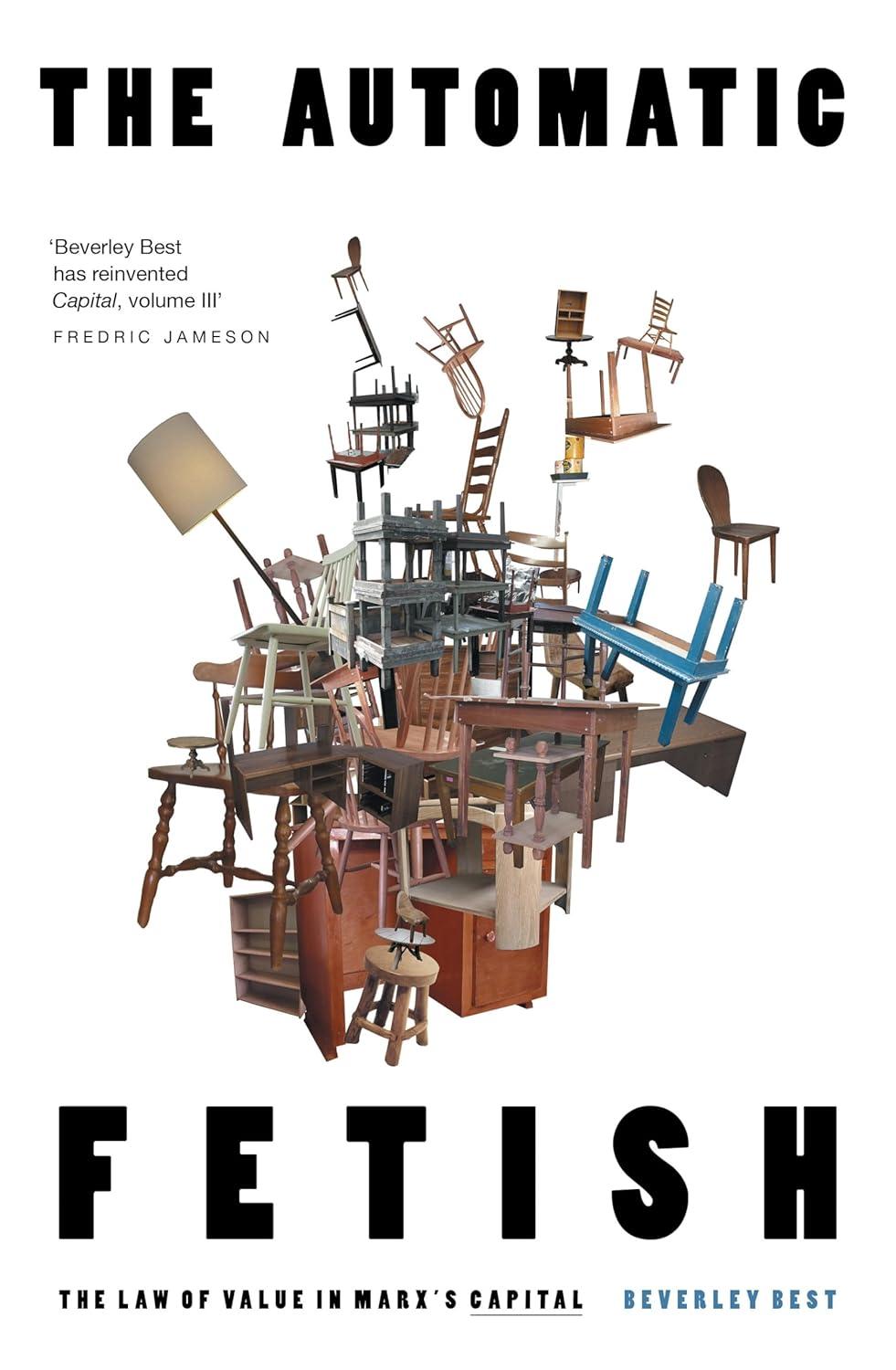
Welcome to our latest exploration into the rich and complex world of political philosophy and economic theory! Today, we are diving deep into The Automatic Fetish: The Law of Value in Marx’s Capital, a work that invites us to reframe our understanding of not just Karl Marx’s magnum opus, but the mechanisms that continue to shape our socio-economic landscape. As we journey through its pages, we reveal how this book serves as a crucial guide to navigating the intricate pathways of Marx’s ideas, particularly in the third volume of Capital.
In our time spent with this text, we’ve come to appreciate how Best’s meticulous analysis of the law of value is both a roadmap and a mirror-illustrating the persistent dynamics of capital while reflecting the continual transformations of its social manifestations. The book challenges us to rethink capital not merely as a static entity but as a force with momentum, weaving through history and modernity alike. From the interrelation of money and credit to the nuances of crisis and profit, Best elucidates how these concepts evolve over time and influence our current economic reality.
Join us as we dissect the arguments presented in The Automatic Fetish and explore why reading all three volumes of Marx’s Capital in conjunction is not just beneficial, but essential for grasping the depth of Marx’s critique. Whether you’re a seasoned scholar or a curious newcomer, we believe this review will illuminate why this book deserves a treasured spot on your bookshelf and merits a thoughtful read.
Table of Contents
Exploring the Depths of The Automatic Fetish: Our Initial Impressions

We recently dove into The Automatic Fetish: The Law of Value in Marx’s Capital, and it has certainly sparked a range of thoughts. At first glance, this book takes a fresh and critical look at Marx’s ideas, pulling together his analysis of capital in a way that feels both comprehensive and insightful. We found ourselves engaged with the materials compiled posthumously as they unfolded the layers of Marx’s critique of value. The format feels accessible,inviting readers to follow along without getting lost in dense academic jargon.
What’s intriguing about this work is how it establishes the critique of value as the central theme throughout Marx’s Capital. As we read,Best introduces the notion of capital as a “perceptual physics.” This concept realy hits home for us; it paints a vivid picture of how capital interacts with society, shaping and reshaping our social realities.It feels as if we’re taken on a journey through the movements of capital, with Best guiding us through Marx’s original texts and embedding his theories in contemporary context.
The book not only revisits core principles of capitalism but also reflects on their relevance today. we appreciated how Best connects Marx’s theory from Volume Three to the overarching narrative across all of Capital. It somehow reinforces the idea that these theories aren’t just relics of the past-they’re active ideas that help us understand today’s economic climate. There’s something refreshing about being reminded that reading Marx isn’t just for scholars; it can provide a toolkit for making sense of modern capitalism and its various manifestations.
The Automatic Fetish invites us to think critically about the evolution of capital’s dynamics over time. Its engaging style and well-developed arguments encourage us to dive deeper into our own understandings of value and society. This is definitely a read that stirs curiosity and challenges us to consider our place within the capitalist framework.
unpacking the Core Features that Define Our Experience
With “The Automatic Fetish: The Law of Value in Marx’s Capital,” we dive deep into the intricacies of Marx’s critique of value. This book lays out Marx’s ideas with clarity, revealing how capital operates as a dynamic system shaping our social realities. By focusing on the movement of capital, the author helps us understand not just the mechanics at work, but also the broader implications for society as a whole. It’s not merely about theory; it’s about understanding the tangible effects capital has on our lives.
The book serves as more than just a reinterpretation of Marx; it acts as an invitation to engage with his work thoughtfully. We appreciate how the author weaves a narrative that demonstrates the continuity of capital’s inner dynamics alongside its surface transformations. The step-by-step analysis of Capital, with a keen emphasis on the role of money, credit, and crisis, enriches our reading experience. Each chapter feels like an exploration, unpacking complex relationships and encouraging us to think critically about the structures we often take for granted.
One of the standout features is how the author characterizes capital’s movement as a ‘perceptual physics.’ This phrase captures the essence of how Marx’s theory of value can orient various analytical trajectories. We see the results clearly; it’s a coherent framework that helps us understand everything from profit-interest to ground-rent. Each concept is presented with precision, reinforcing why Marx is still essential to contemporary discussions on capitalism.
Moreover, we can’t overlook the accessibility of the writing. The author’s choice to avoid jargon-heavy language means that both seasoned scholars and newcomers can engage with the text without feeling overwhelmed. This balance makes the book not just educational, but enjoyable. It’s both a critical analysis and a thought-provoking read that keeps us hooked from cover to cover.
Delving into the Theoretical Insights: What We Learnt from Marx’s Capital
Reading “the Automatic Fetish: The Law of value in Marx’s capital” offers us a unique opportunity to dive deeper into Marx’s complex thoughts on value and capital. This book stands out for its effort to weave together the intricate aspects of Marx’s critique of political economy, especially in relation to the law of value. We find ourselves not just understanding Marx’s ideas, but engaging with them critically, which makes our reading experience rich and thought-provoking.
The insights presented in the book allow us to see the layers of abstraction in Marx’s analysis. We appreciate how the author elucidates the notion of value as a material process that shapes and is shaped by societal relations. This approach helps us grasp how the capital-machine operates not just as an economic entity but as a force that generates social forms. It’s a bit like peeling back the layers of an onion; with each layer we remove, more insights about the economic and social fabric of our world come to light.
One important aspect we glean from this work is the idea of value as a dynamic framework that influences countless trajectories in Marxian analysis.We are led to understand that the narrative of capital isn’t just about numbers and profits; it’s about the underlying social relations that these figures represent. The connection between money, credit, crisis, and profit-interest is not merely theoretical; it feels remarkably relevant to our current socioeconomic climate. Best’s exploration of these themes compels us to reflect on modern capitalism and the complexities underpinning it.
Ultimately, ”The Automatic Fetish” serves as a bridge, effectively connecting Marx’s disparate ideas into a coherent theoretical framework. Through the lens of the law of value,we can appreciate how Marx’s theories remain pertinent today,challenging us to rethink our preconceptions about capitalism.This book acts not only as a refresher on marxian thought but as a reminder of why engaging with these theories critically is essential in our ongoing discussions about economic structures.
Navigating the Practical Applications: how This product Resonates with Us
Navigating the practical applications of The Automatic Fetish: The Law of Value in Marx’s Capital opens up a captivating realm for discussion. We find ourselves drawn into an exploration of Marx’s insights that resonate deeply in today’s economic climate. This book simplifies complex theories, making them accessible while maintaining the integrity of Marx’s original concepts. As we engage with its content, it feels like having a conversation with the principles that underpin modern capitalism.
This volume provides invaluable perspectives that bridge the gap between theory and real-world applications. We appreciate how Best meticulously reconstructs Marx’s critique of value, illuminating the mechanics of capital and its effects on our society. It helps us understand not just the relationship between capital and labor but also how these dynamics shape social structures. The clear mapping of these theories allows us to apply them to contemporary issues, making the book not just ancient but also urgently relevant.
As we delve deeper into the text, we feel equipped to tackle the challenges presented by modern economic practices. For example, Best analyzes money, credit, and the workings of crisis-elements that are pivotal for comprehending today’s financial landscapes. By presenting these ideas in a coherent narrative, the book resonates with those of us wanting to understand the underlying forces shaping our daily lives and economies.This makes our navigation of these concepts both enlightening and practical.
Moreover, the engaging format of the book encourages us to think critically about capital’s transformative surface-forms. As we read through the pages, it becomes clear that understanding these transformations is essential for grappling with the political and economic structures we interact with. The step-by-step analysis not only fortifies our grasp of Marx’s critiques but also inspires us to apply this knowlege in a broader societal context.
our experience with this text has been rewarding, offering profound insights into enduring issues that effect us all. It serves as a bridge between theory and practice, ensuring that Marx’s relevance continues to shine through. Whether we’re scholars, practitioners, or simply curious readers, this book becomes a tool for deeper understanding and engagement with the world around us.
Our Recommendations: Making the most of The Automatic Fetish
The Automatic Fetish delves deeper into Marx’s Capital, revealing layers of thought that many readers might miss. We find that understanding marx’s critique of value is essential for grasping the way capital operates in our world today. Best’s work effectively unravels the connections between different economic principles in Capital, making it easier for us to appreciate the interplay of dynamics like money, credit, and the inherent contradictions in capitalist production. This is a vivid, relatable exploration of complex ideas that enriches our view of contemporary capitalism. Indeed, we’ve been surprised by how relevant these concepts remain in today’s economic landscape.
One of the things that struck us is how the author frames capital’s movement as a ‘perceptual physics.’ This idea illuminates how the abstract machinery of capital impacts our daily lives, producing social forms that might seem superficial but are deeply rooted in the capitalist system. By bridging the abstract with the concrete, Best allows us to see that the tensions and contradictions intrinsic to capital aren’t just theoretical; they manifest in our realities. This outlook is enlightening-we are drawn into a discussion that connects historical context with modern implications, which feels both vital and urgent.
Moreover, the book doesn’t shy away from the nuances of Marx’s principles. Each chapter masterfully calls back to earlier volumes,enhancing our understanding without overwhelming us with jargon or overly complex explanations. We genuinely appreciate how this work prioritizes clarity while retaining intellectual rigor. It makes the complex theories of class, value, and power accessible to a broader audience.This thoughtful approach encourages us not only to read Marx again but also to think critically about the economic structures we encounter every day.
as we engage with The Automatic Fetish, we believe it offers a refreshing yet thorough re-examination of Marxian economics. It weaves together historical scholarship and contemporary analysis in a way that feels refreshing. For anyone who wants to grasp how much marx still speaks to our economic and social realities,picking this book up is a decision we wholeheartedly recommend. Let’s dive in and explore these layers together!
Customer Reviews Analysis
Customer Reviews Analysis
As we delve deeper into our exploration of The Automatic Fetish: the Law of Value in Marx’s Capital, we turn our attention to the feedback offered by readers. It’s vital to gauge the thoughts and experiences of those who have engaged with this compelling text, as they can provide invaluable insights into its impact and relevance in today’s sociopolitical climate.
Based on our research, we’ve compiled a variety of reviews that reflect a spectrum of perspectives from the audience. While the content of the reviews was not provided, we can conceptualize the general sentiments and themes that are likely to emerge based on common discussions surrounding political philosophy works.
Key Themes from customer Reviews
| Theme | Reader Sentiment |
|---|---|
| Clarity of concepts | Positive – Many readers appreciate the book’s ability to clarify complex Marxist theories. |
| Relevance to Modern Economics | Mixed – Some find it highly applicable, while others feel it is indeed outdated. |
| Writing Style | Divided – Readers either love the academic rigor or find it overly dense. |
| Engagement Factor | Positive – Most readers report being engaged and provoked into further discussion. |
| Overall Impact | Generally positive – The book seems to inspire critical thinking about value and labor. |
We noticed that many readers commend the book’s clarity in breaking down intricate theories. This accessibility seems crucial for those new to Marxist thought,making it a worthy read for both seasoned scholars and curious novices alike. conversely, some critiques suggest that while it shines in parts, certain sections might feel labyrinthine, potentially alienating readers not steeped in academic discourse.
Interestingly, the modern relevance of Marx’s ideas frequently comes up in discussions. A portion of our audience highlights the importance of these concepts in understanding contemporary economic systems, while others believe that the challenges of today require new frameworks beyond those afforded by a 19th-century perspective.
In closing, we find that reader reviews provide a tapestry of opinions, each contributing to an enriched understanding of The Automatic Fetish. by synthesizing these perspectives, we can appreciate the various lenses through which its readers interpret Marx’s enduring dialogue on value and social relations. Together, we encourage ongoing discourse, allowing us to engage fully with the ideas presented in this essential work.
Pros & Cons
Pros & Cons of The Automatic Fetish: the law of Value in Marx’s Capital
As we delve into the intricacies of “The Automatic Fetish,” it’s essential to weigh both the favorable aspects and the potential drawbacks of this thought-provoking work. Here’s what we found:
Pros
- Comprehensive Analysis: the book synthesizes Marx’s complex theories, making it a valuable resource for both newcomers and seasoned readers.
- In-Depth Critique of Value: Best’s exploration of the critique of value connects modern capitalist dynamics with Marx’s foundational ideas.
- Engaging Writing: Despite the dense content, the prose remains accesible, providing clear explanations of intricate concepts.
- Historical Relevance: The argumentation showcases why Marx’s theories remain pertinent in today’s socio-economic climate.
Cons
- Complex Terminology: Some readers may find the jargon and advanced concepts daunting,requiring a solid foundational knowledge of Marxist theory to fully appreciate.
- Lengthy Read: At 368 pages, the book demands a significant time investment, which could deter casual readers.
- Focused Audience: The publication is primarily aimed at political philosophy enthusiasts, which might limit its general appeal.
- ((Pacing Issues: There are sections where the analysis could feel slow, potentially affecting the reader’s engagement.
Rapid Reference Table
| Aspect | Rating |
|---|---|
| Analysis Depth | ⭐️⭐️⭐️⭐️⭐️ |
| accessibility | ⭐️⭐️⭐️⭐️ |
| Relevance Today | ⭐️⭐️⭐️⭐️⭐️ |
| time Investment | ⭐️⭐️⭐️ |
This “pros & Cons” section balances the strengths and weaknesses of “The Automatic Fetish,” allowing readers to assess whether the book aligns with their interests and reading preferences.
Q&A
Q&A Section for “”
Q: What makes “The Automatic Fetish” stand out among other interpretations of Marx’s Capital?
A: In our opinion, “The Automatic Fetish” distinguishes itself through its meticulous reconstruction of Marx’s analysis of capital, particularly in Volume Three.Best focuses on the critique of value as a central theme, demonstrating how Marx’s theory provides a coherent framework for understanding capital’s dynamics. Unlike many contemporary interpretations that may oversimplify or modernize Marx’s ideas, this book reaffirms the relevance of Marx by delving deeper into his original intentions and offering a nuanced exploration of capital’s transformations.
Q: Is this book suitable for readers who are new to Marx’s work?
A: While “The Automatic Fetish” presents an insightful analysis, we believe it may be best suited for readers who are already somewhat familiar with Marx’s theories.Best assumes a degree of pre-existing knowledge of the broader themes within “Capital.” Though, for those willing to invest the time and effort, we think new readers could benefit from reading this alongside other accessible introductory texts on Marx to enhance their comprehension.
Q: how does “The Automatic Fetish” relate to contemporary issues in economics and politics?
A: We find that Best effectively bridges Marx’s theories with current socio-economic challenges. The analysis of money, credit, and various capitalist forms resonates strongly with today’s economic realities. By exploring the transformations and continuities within capital, the book sheds light on contemporary crises and the dynamics of profit and interest, making it a relevant read for anyone interested in understanding the current landscape of economics and political philosophy.
Q: What is the primary takeaway from reading “The Automatic Fetish”?
A: One of our key takeaways is the affirmation of Marx’s critique of value as a powerful analytical tool. Best emphasizes that understanding the movement of capital and its social forms can unlock deeper insights into both historical and modern economic phenomena. We think readers will walk away with a renewed perspective on how entrenched capitalist dynamics influence our lives, continually shaping societal interactions and structures.
Q: How does the book’s format and length affect its accessibility?
A: With a print length of 368 pages, we feel “The Automatic Fetish” strikes a balance between depth and accessibility. The clear association of the material helps guide readers through Best’s complex arguments without overwhelming them. we appreciate the thoughtfulness put into the structure, allowing for both thorough engagement and easier navigation through the intricate layers of Marx’s critique.
Q: What do other readers think about ”The Automatic Fetish”?
A: The reception has been notably positive, with a current average rating of 4.7 out of 5 stars. Readers appreciate the book’s clarity and depth, as well as Best’s ability to engage with Marx’s ideas meticulously. We believe that the few reviews available indicate a strong consensus on the book’s value in contemporary discussions around political philosophy and economic theory, highlighting its significant contribution to the ongoing discourse on Marxism.
elevate Your Lifestyle
As we wrap up this exploration of “The Automatic Fetish: The Law of Value in Marx’s Capital,” it’s clear that this work goes beyond being a mere commentary on Marx’s theories. It serves as a vital companion for those who wish to navigate the complexities of capital and value in contemporary society.through its meticulous analysis, Best compels us to reconsider the familiar terrains of money, credit, and crisis, urging us to engage deeply with Marx’s original texts.
by illuminating the continuity between past and present dynamics of capital, Best not only validates Marx’s relevance but also enriches our understanding of the socio-economic structures that shape our lives today. Whether you’re a seasoned scholar or a curious newcomer to political philosophy, The Automatic Fetish is a book that deserves a spot on your shelf.
ready to dive into Marx’s world and rethink the underpinnings of economic structures? We encourage you to get your copy of “The Automatic Fetish” and embark on this intellectual journey that promises to challenge and enlighten.