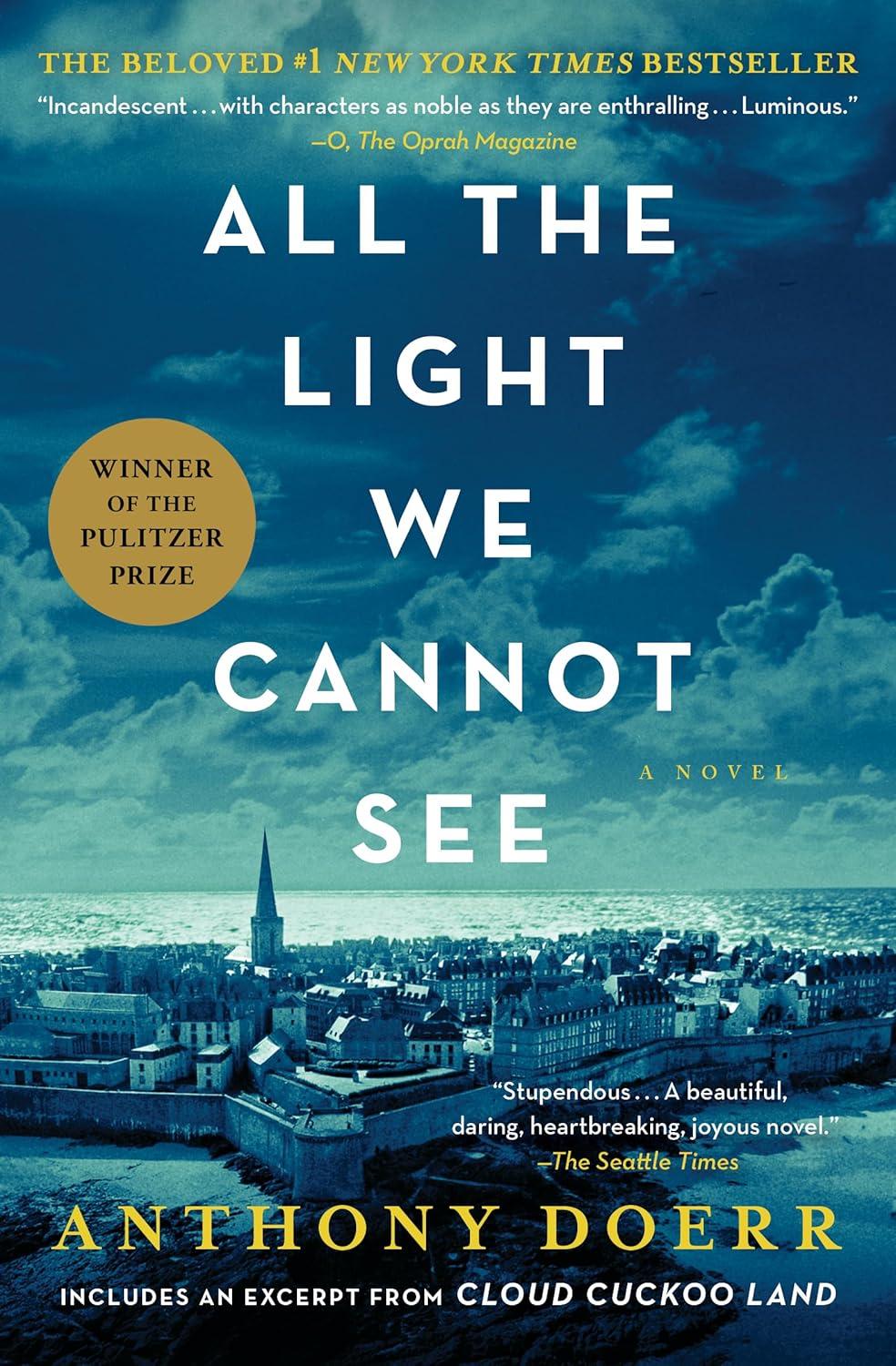
As we embark on the journey of exploring Anthony Doerr’s masterful novel, All the Light We Cannot See, we find ourselves captivated by its poignant narrative and richly woven characters.Initially released in 2014 and later adapted into a Netflix limited series, this story of resilience and humanity set against the backdrop of World War II has garnered remarkable acclaim, including the Pulitzer Prize.
In this beautifully crafted tale, we meet Marie-Laure LeBlanc, a blind French girl whose world is meticulously mapped out by her devoted father, and Werner pfennig, a German boy whose talent for radios leads him to unexpected places. As their paths converge in the besieged town of Saint-Malo, we can’t help but feel the weight of their struggles and triumphs amid the chaos of war.
With its profound themes of survival, kindness, and the connections that bind us across seemingly insurmountable divides, All the Light We Cannot See invites us to reflect on the moments that shape our humanity. In our review, we aim to delve deep into the intricacies of Doerr’s writing, exploring the vivid imagery and emotional depth that have resonated with readers around the world.Join us as we uncover why this novel has captivated hearts and minds, living on as a modern classic worthy of discussion and admiration.
Table of Contents
Overview of a Timeless Journey through Darkness and Light

When we dive into All the Light We Cannot See, we embark on an incredible journey that weaves together the harrowing experiences of two young souls during World war II. This novel takes us from the streets of Paris to the coastal town of Saint-Malo, revealing the coexistence of beauty and brutality amid war’s chaos. The writing is so vivid, it allows us to feel every emotion, smell the salty sea air, and taste the uncertainty that permeates the lives of the characters. We witness the endurance of the human spirit through the eyes of Marie-Laure, a blind girl, and Werner, a gifted boy from Germany, illustrating how their lives intertwine against the backdrop of an unforgiving world.
While exploring the intricacies of Doerr’s narrative, the theme of light and darkness shines through. Marie-Laure’s perspective gives us glimpses of hope and tenderness, even in the bleakest moments. She embodies resilience, navigating her environment with the meticulous help of her father, all while clutching the secrets of that precious jewel they carry with them. Conversely, Werner’s journey reveals the darker sides of humanity as he grapples with the moral implications of his intelligence in a regime that demands loyalty at a terrible cost. Together, their stories capture the essence of what it means to see beyond mere survival-an illumination of compassion and connection that persists, even when surrounded by the shadows of history.
Anthony Doerr’s poignant prose carries us through the contrasting worlds these characters inhabit, showcasing not only their physical journeys but their emotional awakenings too. We find ourselves invested in their fates, hoping for moments of joy and clarity amidst the anguish. The beauty in Doerr’s storytelling lies in his ability to draw us deeply into both characters’ lives, creating a dual narrative that is as engaging as it is enlightening. Each page invites us to reflect on the power of human connections, even in moments where light seems impossibly distant. It’s a remarkable balance of despair and hope that we can’t help but savor as we read.
In every chapter, we truly experience what it means to see ‘all the light we cannot see.’ It serves as a reminder that even in the darkest of times, there can be glimpses of kindness, courage, and love. This novel is not just a historical account; it transcends its time and place, resonating deeply with our understanding of humanity. For anyone willing to take the time to delve into its pages, the experience is one that will linger in our minds and hearts long after we’ve turned the last page. We invite you to immerse yourselves in this exquisite tale, where every sentence is a brushstroke painting the complexities of life during war.
Exploring the Rich Characters and Their Parallel Lives

in All the Light We Cannot See is like embarking on a poignant journey through the quilted landscape of war-torn Europe. we’re introduced to Marie-Laure, a blind girl navigating the chaos of Nazi-occupied France, and Werner, a gifted German orphan drawn into the machinery of war. Each character’s growth is crafted with such care and empathy, allowing us to connect deeply with their struggles and aspirations.
Marie-Laure’s story is especially moving. Despite losing her sight, she embodies resilience and curiosity. Her relationship with her father, who creates a scaled model of their Paris neighborhood, showcases the lengths to which love can go to ensure safety and independence. As we follow her from the safety of Paris to the stormy winds of Saint-Malo, we feel the weight of her fears and the strength of her spirit. In contrast, Werner’s journey reveals the tragic brainwashing of youth in wartime Germany. His innate intelligence leads him down a path he never envisioned, grappling with moral dilemmas while navigating the strictures of the Nazi regime.
The beauty of Doerr’s storytelling shines through as their lives intertwine in unexpected ways. The weight of war hangs over them, shaping choices and destinies but never extinguishing their hopes. When their paths finally converge, we feel the culmination of their parallel journeys. It’s a testament to the power of human connection and the complexity of fate.We find ourselves reflecting on themes of kindness amidst cruelty, echoing the simple yet profound truth that even in darkness, light exists.
Moreover, the structure of alternating timelines keeps us engaged, revealing the past and its implications on the present.This layered narrative allows us to appreciate how each decision echoes across time and space. As we turn the pages, we witness the characters transform, evolving under the pressures of their circumstances yet maintaining a thread of humanity that binds them to each other and to us, their readers.
Unpacking the Layers of Historical Context and Symbolism
when we dive into “All the Light We Cannot See,” we find ourselves navigating the intricate layers of historical context and symbolism. This novel is set during World War II, a period that was marked by profound human suffering, moral dilemmas, and the struggle between good and evil. The backdrop of the war doesn’t just serve as a setting; it’s a significant character in its own right. The dynamics of occupied France and the horrors faced by those trapped in a regime of tyranny are poignantly interwoven into the lives of the protagonists, Marie-Laure and Werner. Their journeys reflect the realities of a world upended by conflict, making us reflect on how war transforms people and relationships.
As we follow Marie-Laure, a blind girl escaping Paris with her father, we encounter deep symbolism in her journey-her blindness is not just a physical condition but a metaphor for the darkness that war casts upon humanity. Meanwhile, Werner’s path, littered with technological prowess and moral conflict, highlights how talent and intellect can be weaponized. His expertise in radios becomes a gateway into a system that exploits him,revealing the struggles between personal ambition,survival,and humanity’s moral compass. Each character’s struggle is a stark reminder of the delicate balance between light and darkness, and between freedom and oppression.
The relationship between these characters illuminates how individual stories can collide against the backdrop of historical events. Marie-Laure and werner are brought together by chance, but their meeting is steeped in grandeur, signifying the frequently enough invisible threads of connection that bind us all, even amidst chaos. Their stories are a testament to resilience and kindness, shedding light on the murky depths of human experience during the darkest of times. This idea poses an crucial reflection for us-how amidst our personal battles, can we find ways to connect and uplift one another?
Throughout the novel, Doerr utilizes rich imagery and symbolism to magnify the emotional weight of historical trauma. As a notable example, the ‘sea’ serves as a recurring motif, representing not only despair but also hope and healing. It’s a reminder that despite iron-fisted oppression, the beauty of life persists. The waves crashing against the cliffs of Saint-Malo echo the relentless nature of time and history, prodding us to examine our perceptions of light and dark in the world around us. Through these multifaceted explorations, we’re encouraged to engage in conversations about the legacies of our past, making it relevant even in today’s context.
Emotional Resonance and Writing Style: Our Experience
In our experience with “All the Light We cannot See,” we found that the emotional resonance of the story is profoundly impactful. From the moment we dove into the narrative, we were enveloped by the beauty of Doerr’s prose, which masterfully brings to life the struggles of its characters. The harrowing journey of Marie-Laure, the blind girl from Paris, and Werner, the German orphan, drew us in. We felt their hopes, fears, and the weight of their respective pasts.Each chapter left us reflecting on the harsh realities of war, but also the unyielding spirit of resilience. Doerr’s ability to paint vivid images with words made every page a sensory experience.
The writing style is conversational yet elegant, making complex emotions easily relatable. Doerr uses short chapters that fluctuate between Marie-Laure and Werner’s perspectives,allowing us to see the world through their eyes. We appreciated how the themes of light and darkness are symbolically woven throughout. This back-and-forth structure added an element of suspense that kept us on our toes. Each character felt like a friend we were rooting for, and their intertwining fates made us realize how interconnected lives can be, even amidst chaos.As we journeyed through the pages, we were particularly struck by the poignant moments that captured the innocence of childhood against the backdrop of war. marie-Laure’s father’s devotion and the nurturing relationship with her great-uncle really tugged at our heartstrings. Similarly, Werner’s internal battle with his moral choices confronted the dark side of humanity. The way historical events are intertwined with personal stories helped us grasp the enormity of their struggles. We found ourselves resonating with the characters’ journeys,and at times,tears welled up in our eyes as we felt the weight of their experiences.
Ultimately, “All the light we Cannot See” invites us to consider the power of human connection. The way Doerr highlights the small acts of kindness amidst the horror of war resonates deeply with us.Even when faced with unimaginable trials, the characters remind us of the light that can exist, even in the darkest of times. This book isn’t just a story; it’s an experience that lingers long after we’ve closed its pages. We wholeheartedly encourage others to embrace this beautiful novel, as it has left an indelible mark on us, reminding us of the strength of the human spirit.
Final Thoughts and Recommendations for Readers Seeking Depth
As we wrap up our thoughts on *All the Light We Cannot See*,it’s clear that this novel serves as a beautifully intricate tapestry woven with threads of human experience,loss,and hope amidst a backdrop of war.What we find striking is how Anthony Doerr crafts profound connections between his characters,weaving their destinies with deft sensitivity. For those of us seeking depth in storytelling, Doerr’s work definitely delivers. The beauty of his prose and the complexities of the narratives create a reading experience that lingers long after the final page.
The emotional richness of this novel makes it a must-read. We witness Marie-Laure’s journey through darkness, and her father’s unwavering love, just as we traverse Werner’s conflict between obedience to a destructive regime and his innate desire for goodness. As we get drawn deeper into these interlocking lives, the simple joys and poignant heartbreaks resonate profoundly. It’s a story we believe is worth savoring slowly, reflecting on the lessons embedded within every chapter. The alternating timelines keep us engaged, always leaving us yearning for more as we piece together their lives.
If you’re looking for literature that not only entertains but also provokes thought and reflection, we wholeheartedly reccommend this read. The themes of resilience and empathy shine brightly, making it a significant addition to any bookshelf. As we navigate through the darkness of history, we find that light can still emerge through connections formed in unexpected circumstances. So, grab a cozy spot, allow yourself to fully immerse in this narrative, and witness how beautifully our world can be captured through words.
Customer Reviews Analysis
Customer Reviews Analysis
As we dive into the customer reviews for All the Light We Cannot See, we find a rich tapestry of opinions that highlight the novel’s profound impact on its readers. From the book’s beautifully crafted prose to the complexity of its characters, many have been left captivated by Anthony doerr’s storytelling.Below, we analyze the general sentiments and themes present in the feedback we’ve gathered.
Overall Sentiment
the sentiment around the novel is overwhelmingly positive. Many readers express their gratitude for the lyrical writing style, deeply emotional characters, and the heavy themes addressed through the lens of World War II. While some readers had specific critiques, they often found themselves engrossed in the narrative.
Key Themes in reviews
- The Power of Resilience: Several reviews mention the characters’ resilience in the face of adversity, particularly Marie-Laure and Werner, whose stories expertly intertwine.
- Emotional Impact: Many readers felt a deep emotional connection to the characters. The poignant writing led them to reflect on themes of loss, identity, and the human condition.
- Character development: The character arcs of both protagonists are frequently praised. Reviewers noted that their journey and growth throughout the novel felt authentic and relatable.
Reader Insights
| Reviewer Perspective | Key Insights |
|---|---|
| First-Time Reader | Gained a new appreciation for historical fiction and enjoyed the slow-burn storytelling. |
| Frequent Genre Reader | Felt the book offered fresh views on familiar WWII themes, particularly from a German perspective. |
| Critics vs. Personal Enjoyment | Some readers expressed skepticism about award-winning novels but found this one to be an exception. |
| Emotional Reader | engaged deeply with the story and characters, often reading in one sitting due to its compelling nature. |
conclusion
the reviews for All the Light We Cannot See reveal a shared sentiment of gratitude for the opportunity to experience such a well-crafted narrative. Readers appreciate the delicate balance of historical storytelling with emotive character arcs, making it a standout selection in contemporary literature. Whether one is reading for enjoyment or seeking deeper understanding, this novel appears to resonate on multiple levels, inviting us all to reflect on the light and darkness present in our own lives.
Pros & Cons
Pros & Cons
In our exploration of All the Light We Cannot See, we found that this novel has a unique blend of qualities that contribute to its acclaim. However, like any piece of literature, it has its strengths and weaknesses.Below, we present a balanced view to help you decide if this book is right for you.
| Pros | Cons |
|---|---|
| Stunning Writing: Anthony Doerr’s prose is poetic and immersive, making it a joy to read. | Pacing Issues: Some readers may find the pacing slow, particularly in the beginning as the story builds. |
| Deep Character development: The characters,particularly Marie-Laure and Werner,are richly developed and relatable. | Complex Themes: The themes of war and morality might be heavy for some readers, requiring contemplation. |
| Historical Insight: The novel provides an intimate look at World War II from unique perspectives. | Multi-timeline Structure: The interwoven timelines could confuse readers who prefer linear storytelling. |
| Emotional resonance: Many readers report a deep emotional connection to the story’s events and characters. | Length: At 544 pages, it may be daunting for those looking for a fast read. |
Ultimately, all the Light We Cannot See is a rich narrative that challenges us to reflect on human kindness amidst chaos. Whether these pros outweigh the cons for you will depend on your reading preferences.
Q&A
Q&A Section: “”
Q1: What inspired Anthony Doerr to write All the Light We Cannot See?
A1: Doerr was inspired by the enduring power of human connection amidst the chaos of World War II. He spent ten years meticulously crafting the novel, focusing on the dual narratives of Marie-Laure, a blind French girl, and Werner, a German boy. The juxtaposition of their lives illustrates the beauty and tragedy of seeking light in darkness, which is a central theme throughout the book.
Q2: How does the narrative structure of the novel enhance the storytelling?
A2: The novel employs a non-linear narrative, shifting between different time periods and perspectives. This structure allows us to gradually piece together the characters’ backstories, deepening our understanding of their motivations and struggles. The interwoven chapters create a tapestry of experiences that highlight the impact of war on individual lives, making the eventual convergence of Marie-Laure and Werner all the more poignant.
Q3: What are some key themes explored in the book?
A3: All the Light We Cannot See explores several key themes, such as the resilience of the human spirit, the moral complexities of war, and the power of human kindness. As we follow Marie-Laure and Werner, we see how their paths are shaped not just by their circumstances but also by the choices they make to connect with others and find hope in dire situations.
Q4: how does the portrayal of Marie-Laure and her disability contribute to the narrative?
A4: Marie-Laure’s blindness profoundly shapes her perception of the world, emphasizing her reliance on her other senses and her instinctive understanding of connection. Doerr masterfully presents her experience, allowing us to perceive the world through her perspective, which not only enriches the narrative but also challenges the conventional portrayals of disability in literature.
Q5: What can readers expect from the upcoming Netflix series adaptation?
A5: The Netflix limited series promises to bring Doerr’s captivating story to life with a talented cast led by Mark Ruffalo and Hugh Laurie. While adaptations often take creative liberties, we anticipate that the series will retain the essence of the book, focusing on the emotional depth and intricate storytelling that has made the novel a beloved classic. we’re eager to see how the visual medium enhances the poignant themes and relationships within the story.
Q6: Would you recommend All the Light We Cannot See to those unfamiliar with historical fiction?
A6: Absolutely! While it is indeed rooted in historical events, the global themes of hope, bravery, and the search for connection resonate with anyone. The exquisite prose and well-crafted characters draw us in, making it accessible even to those who may not typically gravitate toward historical fiction. It’s a story that speaks to the heart, transcending genres.
Q7: Are there any notable writing styles or techniques that stand out in this novel?
A7: Doerr’s writing is often described as lyrical and evocative, filled with vivid imagery and sensory detail that transport us into the settings and emotions of the characters. His use of metaphors and brilliant scene descriptions enriches the narrative, allowing us to truly immerse ourselves in the tumultuous world of occupied France. We find his style to be both captivating and hauntingly beautiful, enhancing our reading experience.
Q8: What is the importance of the title, All the Light We Cannot See?
A8: The title highlights the idea that while darkness seems pervasive in wartime, there are always glimmers of light-moments of beauty, kindness, and hope-that may be overlooked. It serves as a reminder that even in our most difficult times, there is a capacity for goodness, connection, and understanding, which is a fundamental aspect of the human experience we strive to recognize.
We hope this Q&A section helps clarify any questions you may have about All the Light We Cannot See. It’s a novel that stays with us long after reading, and we look forward to sharing your thoughts and experiences as you delve into this beautifully crafted story.
Unleash Your True Potential
As we conclude our exploration of ”All the Light We Cannot See,” it’s evident that Anthony Doerr’s masterpiece is not just a story-it’s an experience that lingers long after the last page is turned. Through the intertwined lives of Marie-laure and Werner, we are reminded of the resilience of the human spirit amidst the darkest of times. The vivid imagery and poignant themes resonate deeply, inviting us to reflect on our own connections to humanity and hope.
Whether you’re drawn to historical narratives or beautifully crafted prose, this novel promises a captivating journey that is both heartbreaking and uplifting. With the recent release of the Netflix limited series, now is the perfect moment to dive into Doerr’s world and appreciate the layers of detail that make this tale truly unforgettable.
If you haven’t yet added this Pulitzer Prize-winning novel to your collection,we encourage you to sieze the opportunity and experience it for yourself. Click here to purchase your copy: All the Light We Cannot See: A Novel.Happy reading!